Savannah Tattoo Aftercare: First Week Healing Guide
Your tattoo looked perfect on day one, but aftercare is what decides whether it stays crisp or ends up faded, scabbed up, or healing patchy. In Savannah's heat, humidity, and everyday friction (hello, waistbands and backpack straps), a small mistake in the first week can show up in the final result.
Have aftercare questions about your new ink?
The team at Resurrection Ink is here to help.
If you want a clean heal and sharp lines, whether you got fine-line, realism, neotraditional, or bold blackwork, this guide walks you through exactly what to do (and what not to do) from the first 48 hours to long-term care.
Tattoo aftercare basics: what you're actually doing (and why it matters)
A fresh tattoo is an open wound in the top layers of skin. Your job during healing is straightforward:
🧼
Keep it clean
Reduce bacteria and irritation
💧
Keep it moisturized
Support the skin barrier
🛡️
Protect from friction + sun
Prevent trauma and pigment fade
🚫
Leave it alone
No picking, soaking, or testing it
When aftercare goes wrong, the most common outcomes are heavy scabbing that pulls ink out, patchy healing with lighter spots, blurred edges from irritation or over-moisturizing, and in rare but serious cases, infection.
If you're ever unsure what your artist used on you (traditional bandage vs. medical film/"second skin"), check your paperwork or stop by for guidance.
The first 48 hours (the part most people mess up)
These first two days are where you prevent problems like thick scabbing, excessive redness, and irritation. Here's the clean, simple routine.
Bandage and film timing: follow the wrap type
Traditional Bandage or Pad
- Remove after a few hours (commonly 2 to 6 hours) unless instructed otherwise.
- If it sticks, use lukewarm water to gently loosen the adhesive, do not rip it off.
Medical Film ("Second Skin")
- Designed to stay on longer, it creates a sealed barrier.
- Fluid collecting under the film (plasma/ink) is normal and not automatically a problem.
- If the film peels, leaks, or traps excess fluid, it may need replacing, do not patch with random tape.
Key rule: Once you remove the first wrap, your tattoo should not go back under a dirty or reused wrap. If you re-cover it (rarely needed), use a clean, appropriate dressing only.
Washing technique: gentle, brief, and consistent
When you wash your tattoo, you're removing plasma, excess ink, sweat, and bacteria, not "scrubbing it clean."
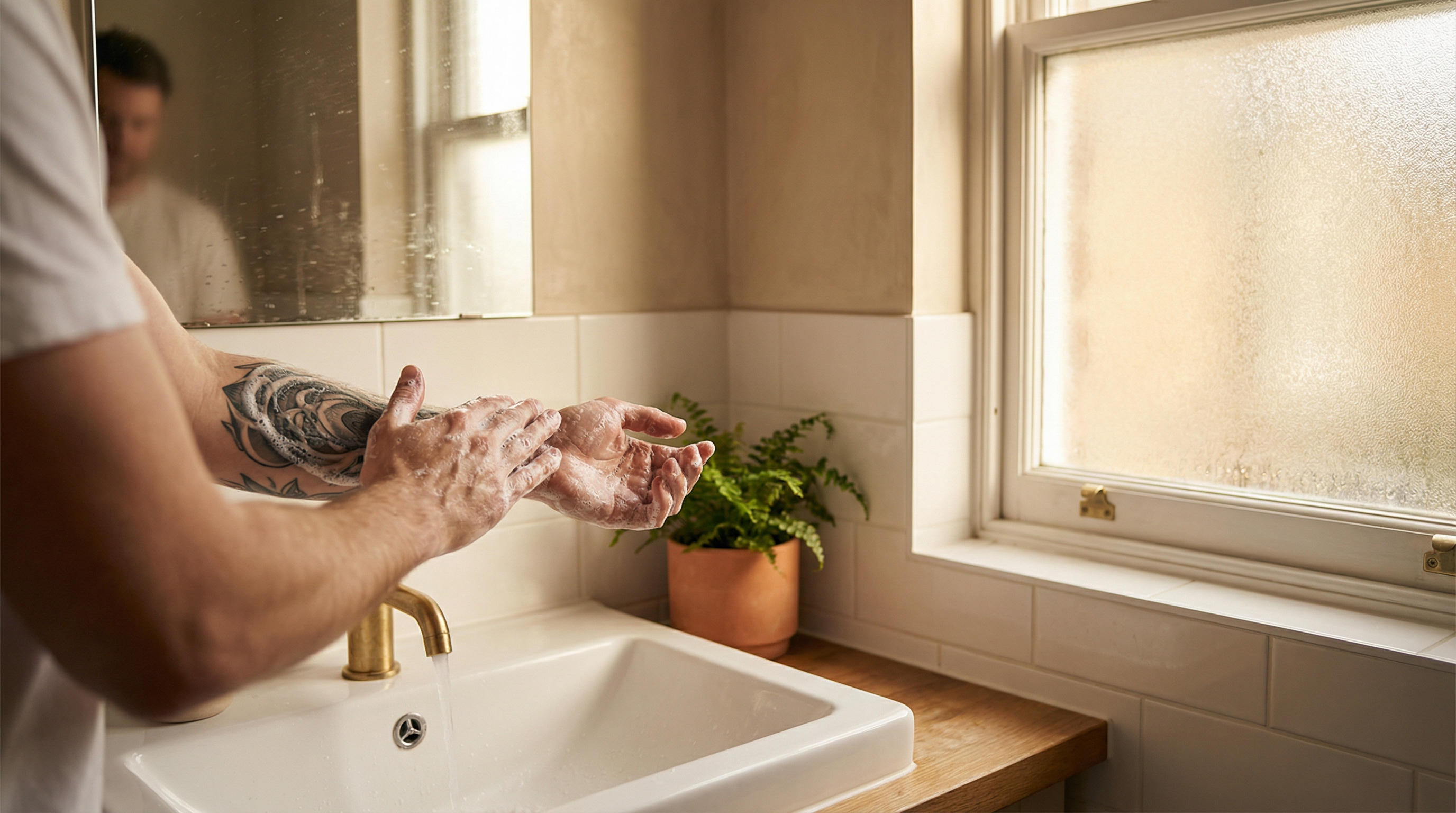
- Wash your hands first , every single time. Your hands touch phones, door handles, and gym equipment, do not transfer that to your tattoo.
- Use lukewarm water and a mild, fragrance-free soap .
- Use your clean fingertips only , no washcloths, loofahs, sponges, or brushes.
- Rinse thoroughly so no soap residue remains (residue causes irritation and dryness).
How often? A good target is 2 to 3 times a day in the first few days. More than that often backfires, over-washing dries you out and triggers more cracking and scabbing.
Pat-dry routine: drying matters more than people think
- Pat dry with a clean paper towel, or let it air-dry in a clean environment.
- Do not rub. Rubbing can irritate the skin and disturb the healing surface.
Moisturizing: the number one place people overdo it
Once your tattoo is clean and fully dry, apply a very thin layer of a tattoo-safe, fragrance-free moisturizer. You want it to look hydrated, not glossy or "wet." If it looks shiny and slick, that's usually too much. Too much moisture can suffocate healing skin and contribute to irritation or breakouts.
Clean hands + clean linens = cleaner healing
In the first week, treat your tattoo like it's brand-new skin (because it is). Wash your hands before touching it, swap to clean sheets, and wear freshly washed loose clothing. A lot of "mystery irritation" is really just bacteria and friction from dirty fabric.
Why clean linens matter (especially in Savannah)
Between humidity, sweating at night, and pets hopping on the bed, your sheets can become the hidden reason a tattoo stays irritated.
- Use clean sheets for the first several nights.
- Avoid sleeping with your tattoo pressed into bedding if possible.
- Wear loose, breathable clothing that won't stick or rub.
If your tattoo weeps plasma or ink the first night, that's common. Keep it clean, don't panic, and avoid re-wrapping with something that will trap moisture.
A realistic week-by-week healing timeline (and what's "normal")
Every tattoo heals a little differently depending on placement, your skin, and the style. Solid blackwork and heavy saturation can feel more intense than light shading. This timeline helps you tell normal healing from needs-attention .
What not to do (this is where fading and patchy heals come from)
If you want your tattoo to stay sharp, avoid these common mistakes:
No soaking
No baths, hot tubs, pools, river floats, or ocean swims until fully healed. This includes quick dips. Soaking softens healing skin and increases infection risk.
No picking or scratching
Picking peeling skin can remove ink and leave light spots.
No heavy exfoliants
Skip scrubs, acids, and rough loofahs on the tattoo.
No tight compression
Tight leggings, bras, or uniforms can rub and inflame the area.
No direct sun exposure
A fresh tattoo plus UV is a recipe for early fading.
Don't over-wash
More washing isn't "extra clean," it's often extra irritation.
Don't over-moisturize
Greasy, shiny skin doesn't heal better, it often breaks out or softens scabs.
When is exercise safe?
Light movement is usually fine if you can keep the area clean and avoid friction. Watch out for:
- Sweat trapped under tight clothing
- Gym bacteria on benches and mats
- Repetitive rubbing from sports bras, waistbands, and straps
If you train, adjust your routine for a week: clean clothes, wipe equipment, and wash the tattoo after.
When is swimming safe?
Wait until the tattoo is fully healed , not just "done peeling." For most people, that's around 3 to 4 weeks , sometimes longer depending on size and placement.
Planning a beach day at Tybee or a pool weekend? Schedule your tattoo with that healing window in mind.
Want help planning a tattoo around travel, gym time, or the beach?
Call us or visit the studio page to talk it through.
Long-term tattoo care: how to keep it looking crisp for years
Healed tattoos fade for a few main reasons: sun exposure, dry skin, harsh exfoliation, and time . You can't stop time, but you can control the rest.
Sunscreen is the difference between "still sharp" and "why is it blurry?"
Once the tattoo is fully healed, make sunscreen a habit. Use a broad-spectrum formula, reapply when outdoors (especially in coastal Georgia sun), and consider UPF clothing for long days outside. UV exposure is one of the fastest ways to dull blackwork and wash out color.
Moisturize like you mean it (but keep it simple)
Hydrated skin reflects light better, which makes tattoos look cleaner and more saturated. Use a basic, fragrance-free moisturizer after showers. In colder months, or if your skin runs dry, moisturize more consistently.
Avoid harsh exfoliants directly on the tattoo
Once healed, normal washing is fine. But repeated use of rough body scrubs, strong chemical exfoliants, or aggressive shaving irritation can make the skin look dull and irritate the area, which doesn't help the tattoo's appearance.
Touch-ups: how they work and when you might need one
Touch-ups are common, especially for highly detailed linework, high-friction placements like hands, fingers, and feet, and areas that healed patchy due to scabbing or irritation. If you notice a spot that healed lighter, let it fully heal first, then talk with your artist about whether a touch-up is the right move.
If you're still deciding on style or placement, check out different approaches in the studio portfolio: explore custom tattoo styles and see artist work and specialties.
When to contact the studio vs. when to contact a doctor
Most tattoos have some redness and tenderness early on. But pay attention to symptoms that get worse instead of better.
Reach out for guidance if you notice:
- Redness that expands significantly after the first couple days
- Increasing swelling, heat, or pain
- Thick yellow or green discharge
- Fever or chills
- Red streaking moving away from the tattoo
If you suspect infection, seek medical care promptly.
What info to share (so you get useful help fast)
Whether you're asking the studio or a medical professional, be ready to share:
- When you got tattooed (day and time)
- Placement on the body
- Whether you had film or bandage and when it was removed
- Your exact washing and moisturizing routine
- Any products used (soap, lotion, ointment)
- Clear photos in good lighting
Bonus: aftercare still matters if you're a piercing customer too
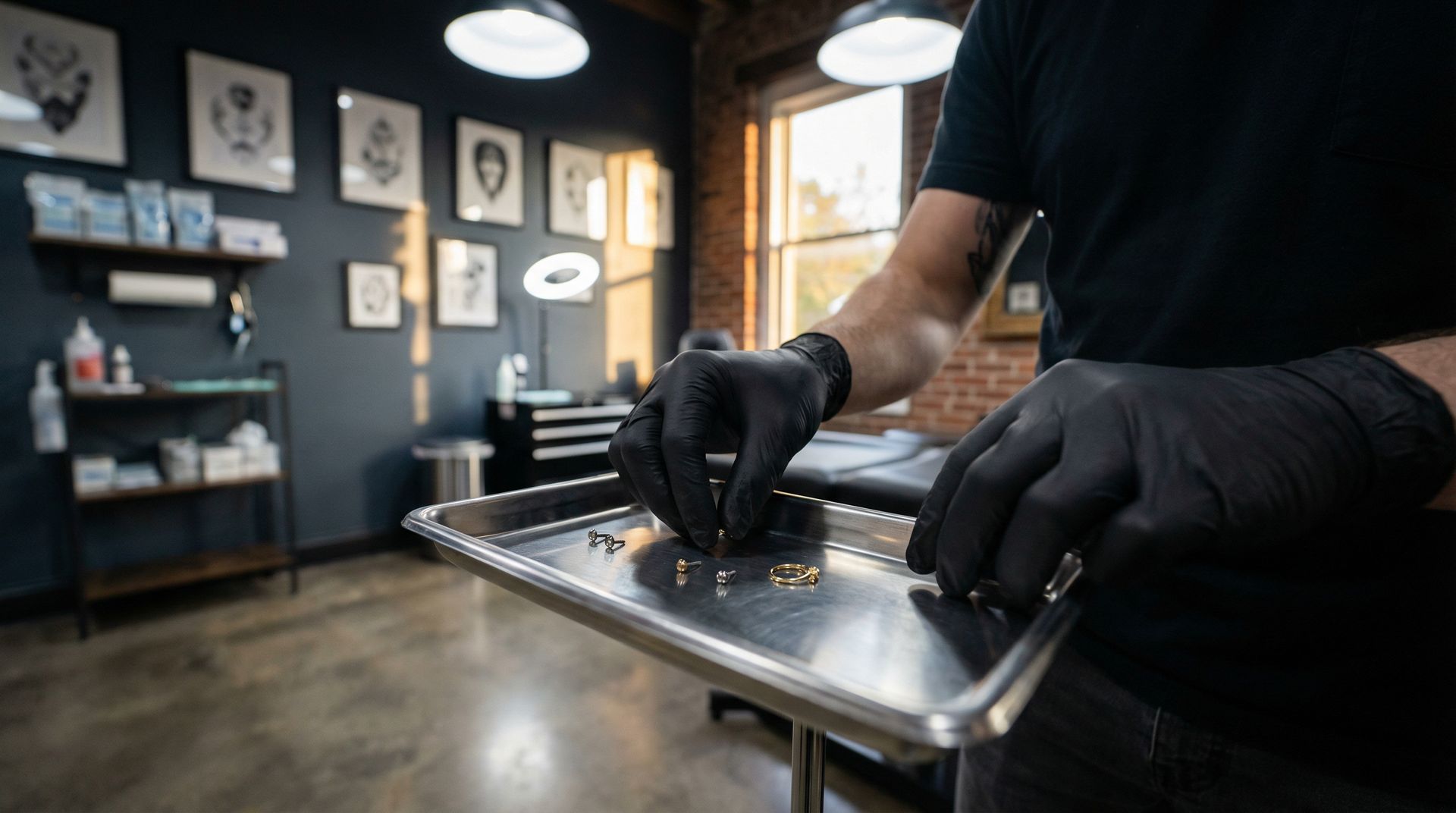
If you're the type who gets a new tattoo and a fresh piercing in the same month, remember: both need clean, consistent aftercare, but the routines aren't identical. Piercings heal differently and often involve implant-grade jewelry like implant-grade surgical steel. If you're planning both, start here: view piercing services and safety info.
And if you're browsing ideas for a future appointment (or want to grab something for a friend who's been talking about their first piece), these can help: shop gift cards and merchandise.
The simple tattoo aftercare checklist (save this)
Wash hands before touching your tattoo
Wash tattoo gently 2 to 3 times per day (don't over-wash)
Pat dry, don't rub
Apply a thin layer of fragrance-free moisturizer (don't overdo it)
Wear clean, loose clothing and sleep on clean sheets
Avoid soaking, swimming, and direct sun until fully healed
Don't pick, scratch, or peel skin
Protect it from friction (straps, waistbands, bras, tight leggings)
If you follow the basics and stay consistent, your tattoo has the best chance of healing smooth and staying sharp.
Have aftercare questions about your new ink?
Call Resurrection Ink at 912-352-9926 or visit the tattoo page for next steps.