First Tattoo in Savannah: A Step-by-Step Guide (From Planning to Healing)
You want your first tattoo to be exciting—not stressful—and you don’t want to walk in feeling unprepared, awkward, or like you’re “doing it wrong.” A little planning goes a long way, especially when you’re trying to nail the right style, pick a placement you won’t regret, and understand what healing actually looks like in real life (not just on day one).
Want your first tattoo done the right way in Savannah? Call Resurrection Ink at 912-352-9926 — Call Us Now
Phone: 912-352-9926
Below is a step-by-step guide that walks you from “I think I want a tattoo” to “it’s healed and looks great,” with the stuff first-timers in Savannah usually wish they knew sooner.
Step 1: Pre-tattoo planning (the part that makes tattoo day way easier)
1) Choose a style you actually want (not just what’s trending)
“Tattoo style” is basically the visual language your tattoo will use. If you walk in saying “I want something cool,” you’ll get overwhelmed fast. Instead, start by identifying the style that matches what you picture in your head.
A few common directions:
- Blackwork: bold black ink, strong contrast, graphic shapes
- Neotraditional: bold lines, rich color, stylized realism
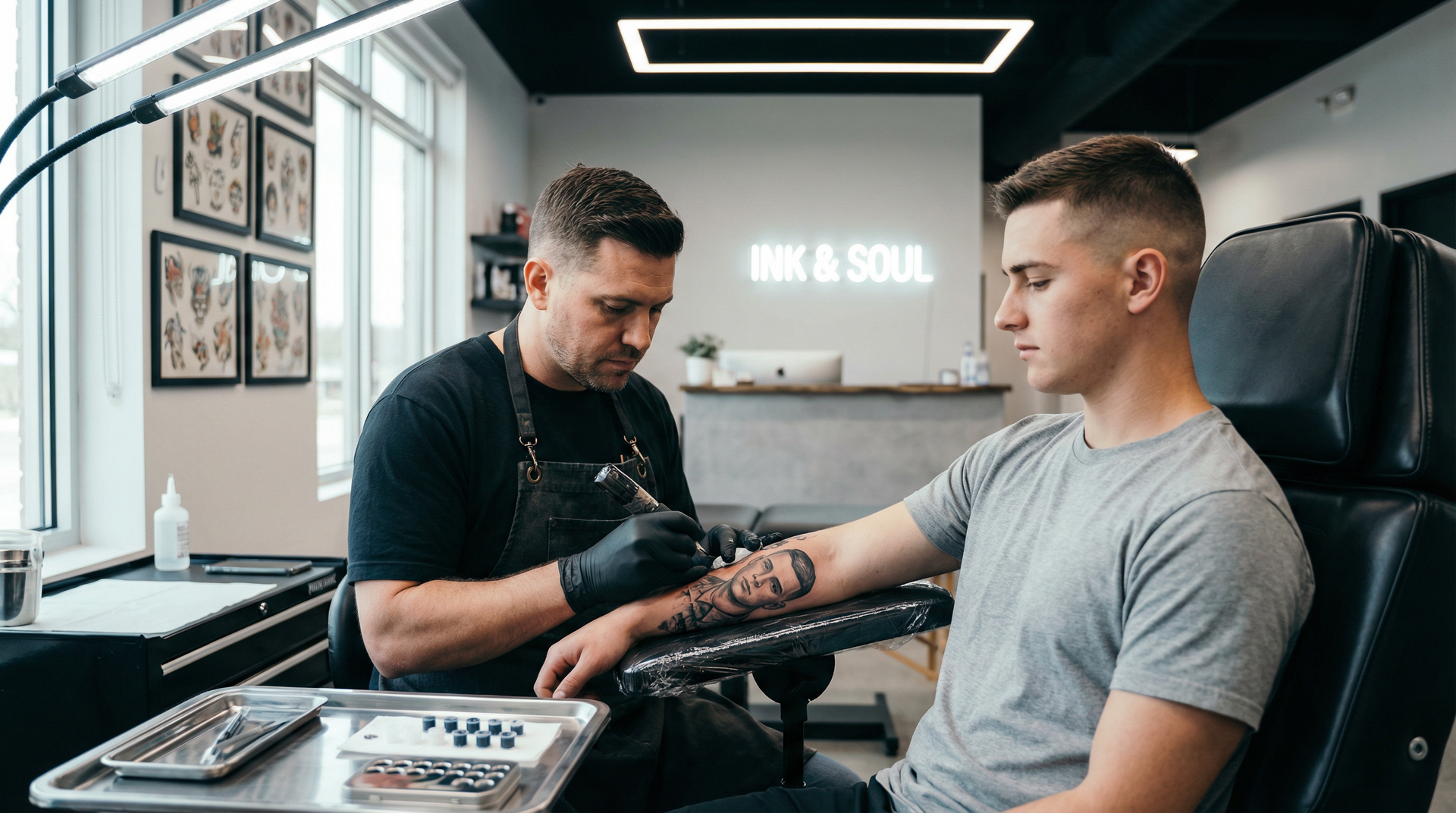
- Realism: portrait-like detail, smooth shading, high accuracy
- Fine-line: delicate linework and subtle detail (placement and aftercare matter a lot here)
If you’re not sure what you like, scroll portfolios and save examples that feel consistent. You can see different approaches by checking out the artist gallery.
2) Pick placement based on your life, not just aesthetics
Placement isn’t only about how it looks—it affects pain level, healing speed, visibility at work, and how the tattoo ages.
Quick placement considerations:
- High-friction areas (inner thighs, ribs, feet): can heal rougher and fade faster
- Sun-heavy areas (forearms, shoulders): need extra sun protection long-term (Savannah sun is no joke)
- Bendy areas (inner elbow, knee ditch): can be more uncomfortable and sometimes need touch-ups sooner
- First tattoo sweet spots: outer upper arm, calf, outer forearm, shoulder blade (generally manageable)
If your lifestyle includes beach days, pool time, or boating, plan around healing time—fresh tattoos and water don’t mix.
3) Decide size based on detail (and longevity)
A common first-timer mistake is choosing a design with a ton of detail… but asking for it to be tiny. Small tattoos can look amazing, but micro-detail can blur over time—especially if it’s packed too tightly.
Rule of thumb: the more detail you want, the more space you should give it. Your artist can adjust line weight, spacing, and shading so it heals readable and stays readable.
4) Gather references the right way (so your artist can actually use them)
You don’t need to be an art director—but you do need to communicate clearly.
Bring:
- 3–8 reference images that show the vibe (line thickness, shading level, color vs black/gray)
- Notes on what you like in each image (“I like this leaf shape” / “I like this heavy shading”)
- A quick list of “please avoid” (certain symbols, faces, specific fonts)
What not to bring:
- A single tiny screenshot and “make it like this”
- Someone else’s custom tattoo and “copy this exactly” (good artists don’t do 1:1 copies)
Save a few images that share the same style (all blackwork, all realism, etc.). Mixing five different styles makes it harder to design something cohesive—and you’ll get better results when your references match.
5) Budgeting: what you’re really paying for
Tattoo pricing usually reflects:
- size + time
- detail level
- placement difficulty
- custom design time
- artist experience
If you’re booking a custom piece, remember: a deposit is normal. At Resurrection Ink, a $100 deposit is required to secure tattoo appointments, and it applies toward your tattoo.
If you’re trying to keep costs predictable for your first tattoo, talk to your artist about simplifying the design (bolder lines, fewer tiny details) or adjusting size.
6) Walk-in flash vs. scheduled custom work (which is better for a first tattoo?)
If you’re searching “first tattoo Savannah,” this is one of the biggest decisions.
Walk-in tattoos (often flash):
- Great if you’re flexible and want something simple
- You can choose from available designs or smaller concepts
- Perfect for spontaneous “I’m ready today” energy
Resurrection Ink offers walk-in tattoos 7 days a week .
Scheduled custom work (appointment):
- Best if you want a unique design, specific placement, or larger piece
- Gives time for consultation, design prep, and sizing
- Usually requires a deposit to lock in the time slot
Start here if you want to understand the process and options: custom tattoo booking info.
7) A checklist of questions to ask your tattoo artist (save this)
Bring these questions to your consultation or walk-in conversation:
- How would you adjust this design to fit my placement?
- What size do you recommend so the details heal clean?
- Would you do this as blackwork, black/gray, or color—and why?
- What’s the expected time (and can we split into sessions if needed)?
- What should I do the day before and day of?
- What aftercare method do you recommend for my skin type?
- What’s normal healing vs. a red flag?
- If it needs a touch-up later, how does that work?
Step 2: What happens on tattoo day (so you don’t feel blindsided)
1) Paperwork + prep
Expect standard studio steps like:
- ID verification (don’t forget it)
- consent forms / release forms
- confirming design, placement, and final size
- discussing aftercare expectations
Pro tip: eat beforehand and hydrate. Low blood sugar + nerves can make you feel lightheaded.
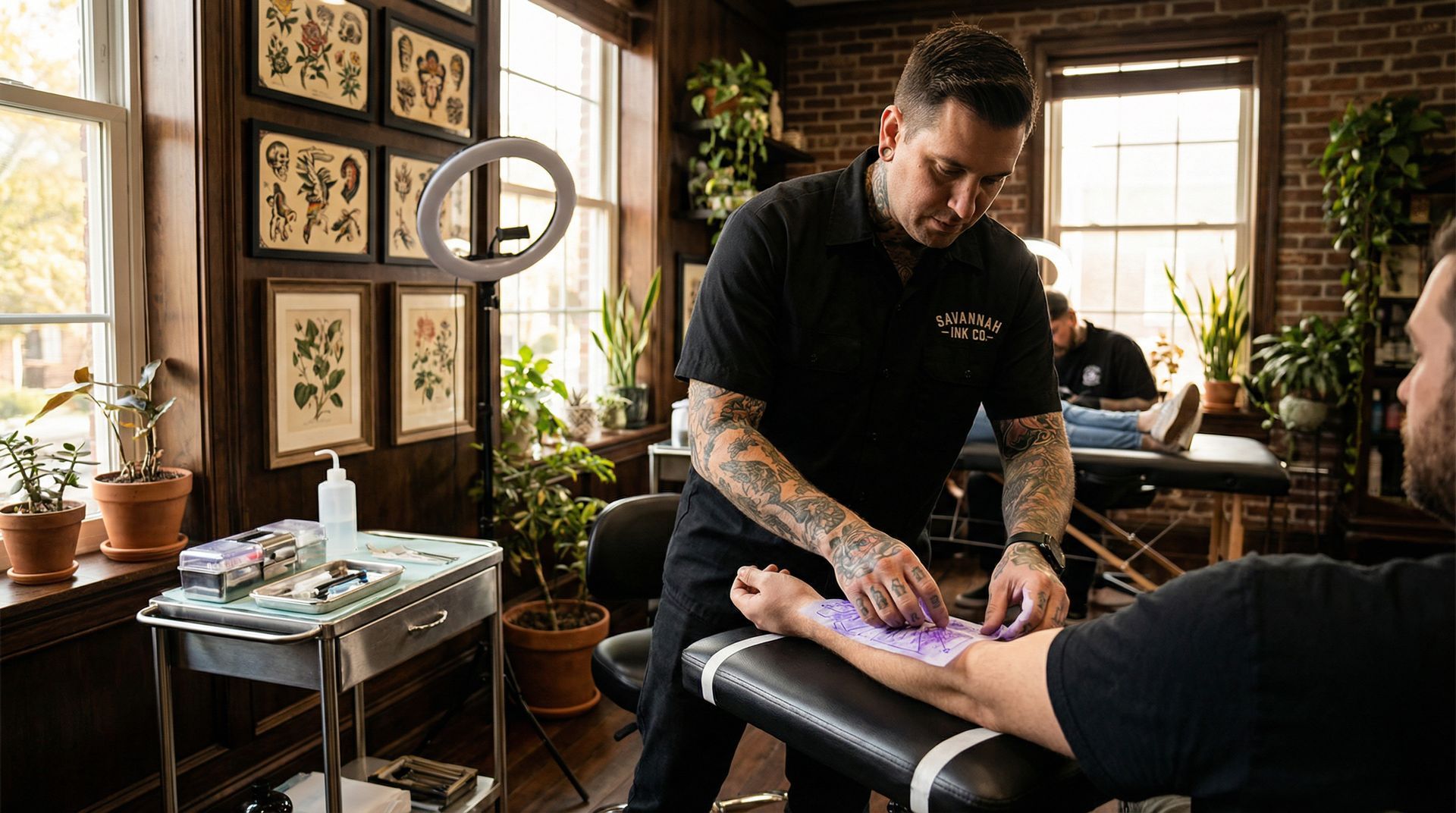
2) Stencil placement (this is where you speak up)
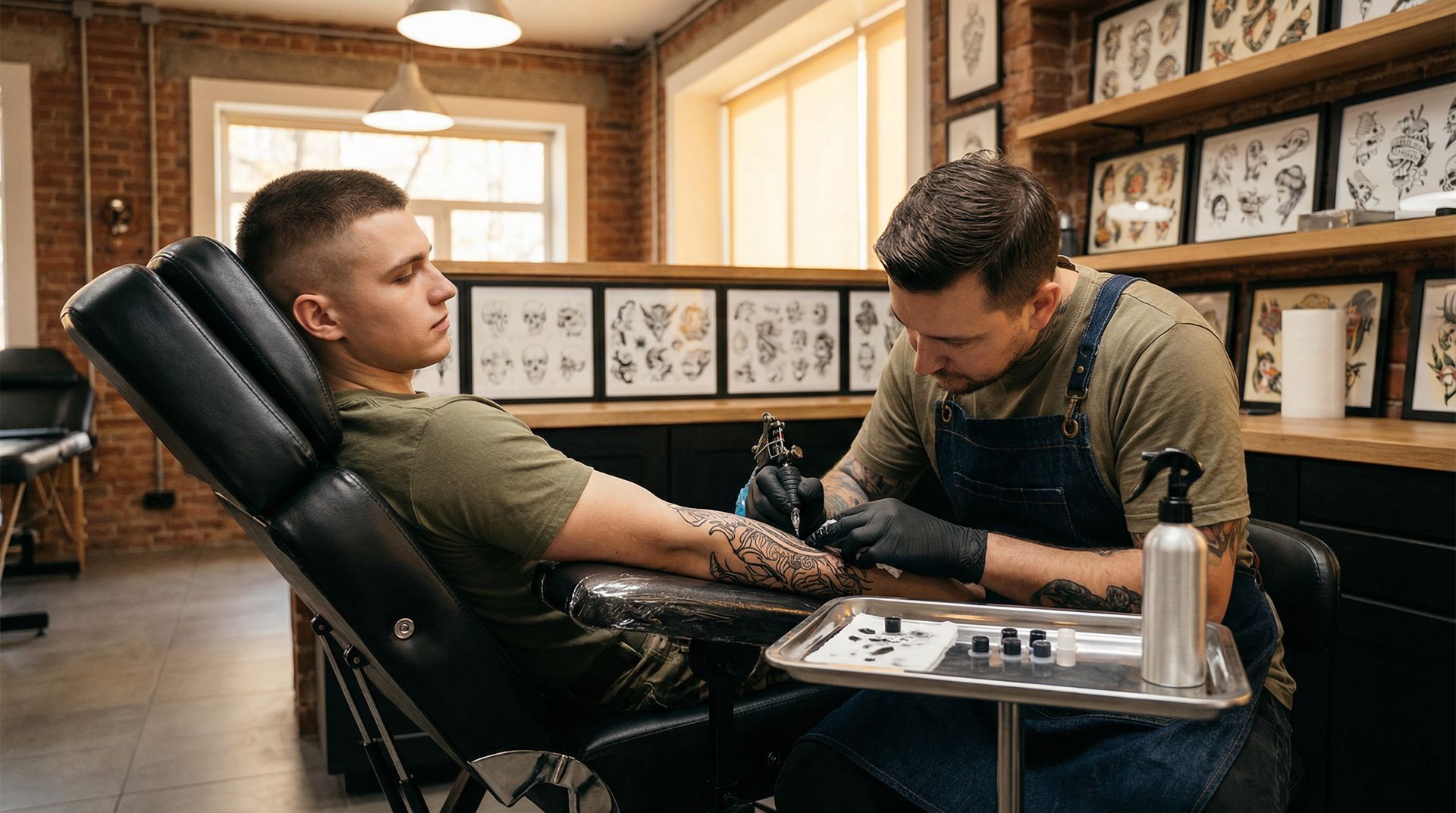
Your artist will clean the area, prep the skin, and apply the stencil. This is the moment to be picky—in a good way.
Check:
- Is it straight? (especially on arms/legs)
- Does it line up with your body when you move naturally?
- Is it the right size from a normal viewing distance?
- Is it too close to a bend or clothing line?
It’s completely normal to adjust the stencil more than once. A great first tattoo experience includes you saying, “Can we shift it slightly?”
3) Shaving + skin prep
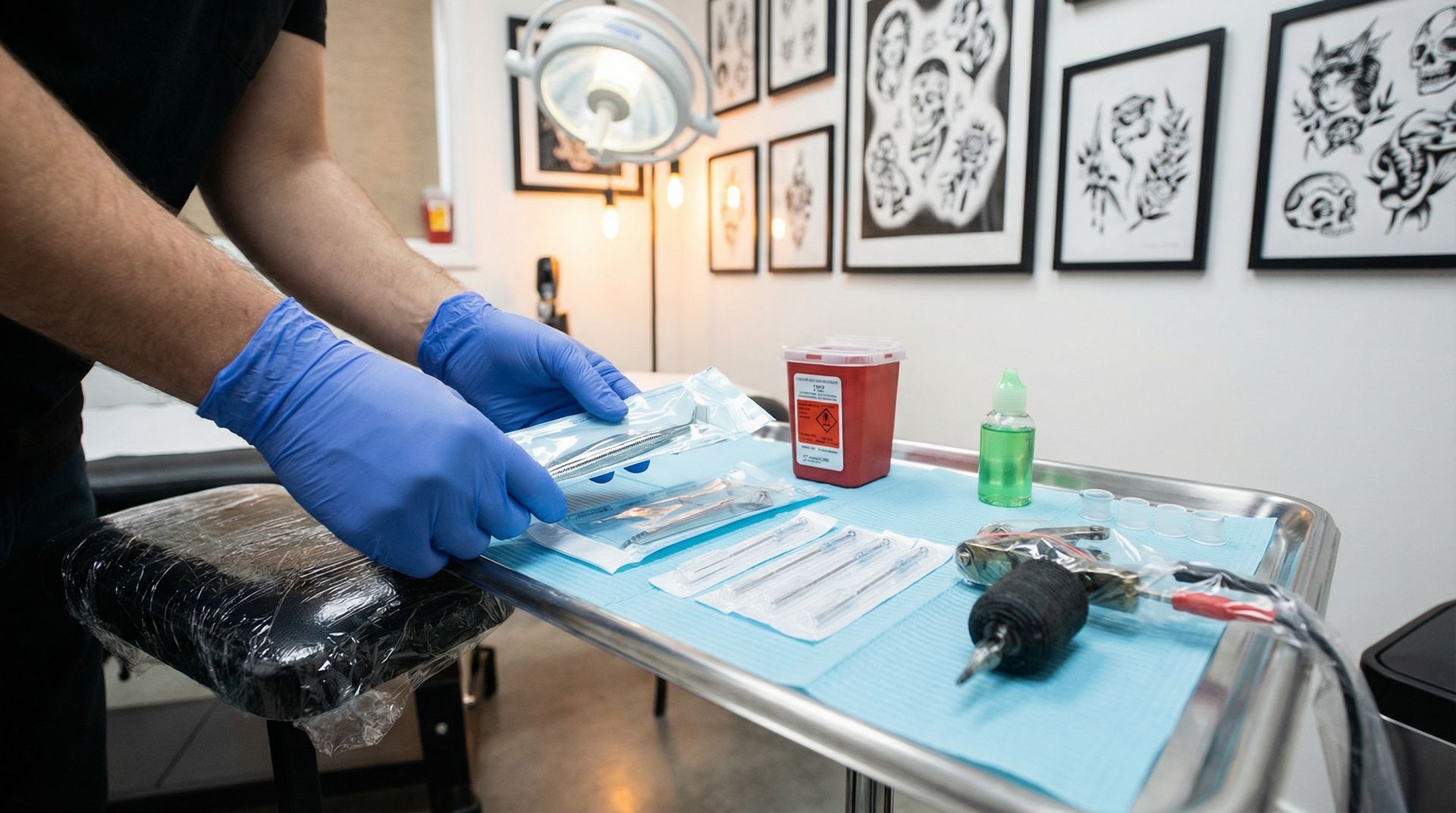
Even if you think you don’t have hair there, the area is often shaved for a clean surface. Then it’s disinfected and prepped to reduce irritation and help ink go in cleanly.
4) Linework vs shading (what you’ll feel, and what’s happening)
Most tattoos happen in phases:
- Linework: crisp outline; can feel sharp and scratchy
- Shading: often feels more “burny” or raw because it’s repeated passes
- Color packing (if applicable): can be intense in sensitive areas
Pain is subjective. Placement matters more than toughness.
5) Pain management that actually helps
Skip the myths and do the basics:
- sleep well the night before
- eat a real meal (protein + carbs)
- stay hydrated
- avoid alcohol the day before and day of
- bring headphones if it helps you stay relaxed
- ask for a quick break before you hit your limit (not after)
If you’re prone to anxiety, tell your artist. You don’t need to “power through” silently.
6) What “good collaboration” looks like during the session
A smooth tattoo session is a team effort. Here’s what that looks like:
You do:
- hold still as best you can
- speak up if you need a break
- communicate clearly if something feels off (positioning, nausea, pain spikes)
- follow directions on how to sit/lay
Your artist does:
- checks in with you and explains what’s next
- keeps the station clean and organized
- confirms key decisions (placement, size, any final tweaks)
- supports you taking short breaks if needed
If you want to see different artists’ styles before you commit, start with meet the artists.
Step 3: Healing + long-term care (from fresh tattoo to fully healed)
Immediately after: what you’ll see
Your tattoo will look:
- very sharp and saturated
- a bit swollen or red around the area
- slightly weepy (plasma is normal)
You’ll leave with aftercare instructions. Follow them exactly—even if your friend swears their method is “better.”
A realistic day-by-day healing timeline (what to expect)
Every body heals differently, but here’s a solid general guide:
Days 1–3:
- redness, warmth, mild swelling
- tattoo may ooze a bit
- keep it clean; don’t over-wash
Days 4–7:
- itching starts
- peeling/flaking begins (like a sunburn)
- tattoo can look dull or “cloudy” temporarily
Days 8–14:
- peeling tapers off
- skin looks dry or slightly textured
- itching may come and go
Weeks 3–4:
- surface looks mostly healed
- deeper layers are still finishing repair
- color/contrast settles
What not to do (this is where people mess up)
Avoid:
- soaking (baths, pools, hot tubs, ocean) until healed
- heavy sweating and friction early on (especially in Savannah humidity)
- tight clothing rubbing the area
- picking flakes or “helping” peel
- petroleum-heavy products unless your artist specifically told you to use them
- direct sun exposure on a fresh tattoo
If you’re a beach person (Tybee weekends, boating, outdoor work), plan your tattoo timing so you’re not tempted to test the rules.
Want your first tattoo done the right way in Savannah? Call Resurrection Ink at 912-352-9926 — Call Us Now
Phone: 912-352-9926
Basic aftercare routine (simple and effective)
Your artist may tailor this to your skin and the tattoo type, but a typical safe routine looks like:
- Wash with clean hands and a mild, fragrance-free soap
- Pat dry with a clean paper towel (don’t scrub)
- Moisturize lightly with a recommended fragrance-free lotion (thin layer—don’t smother it)
- Repeat as instructed, and keep it clean
If your tattoo is covered with a protective bandage/film, follow the exact instructions for when to remove it and how to clean afterward.
Sunscreen = how you protect your investment
Once your tattoo is fully healed, sunscreen becomes part of “tattoo aftercare for life.” UV exposure is one of the fastest ways to fade a tattoo—especially blackwork contrast and realism detail.
Use a broad-spectrum SPF anytime it’ll be in the sun. This matters a lot in coastal Georgia where outdoor time is easy to rack up without thinking about it.
When to ask about touch-ups
Touch-ups aren’t a sign something went wrong—sometimes they’re just part of the process, depending on:
- placement (hands, feet, ditch areas)
- how your skin holds ink
- how well healing went
- fine-line detail vs bolder designs
Wait until it’s fully healed before judging final results. If something looks patchy after healing, reach out and ask what your options are.
How to feel confident walking into a Savannah tattoo studio for the first time
If you take nothing else from this guide, remember:
- bring clear references and be open to your artist’s adjustments
- eat, hydrate, and don’t show up rushed
- stencil placement is your moment to speak up
- aftercare is part of the tattoo, not an optional add-on
If you’re still deciding between a walk-in and an appointment, learn the basics here: tattoo services in Savannah. And if you’re thinking about pairing your new tattoo with new jewelry later, you can also check out body piercing services(quality jewelry like implant-grade surgical steel matters for healing).
Want your first tattoo done the right way in Savannah? Call Resurrection Ink at 912-352-9926 — Call Us Now
Phone: 912-352-9926