Tattoo Planning Near Hunter Army Airfield: Walk-Ins, Appointments, and Healing Around Your Schedule
If you’re stationed near Hunter Army Airfield and you want a tattoo, the biggest challenge usually isn’t picking the idea—it’s making it fit your schedule and your healing window. Between PT, uniform wear, duty rotations, and the reality that a fresh tattoo needs real care, it’s smart to plan the session and the aftercare before you ever sit in the chair.
Near HAAF and ready to book? Call Resurrection Ink at 912-352-9926 or book online.
Call Us NowFinding a tattoo shop near Hunter Army Airfield: walk-in or appointment?
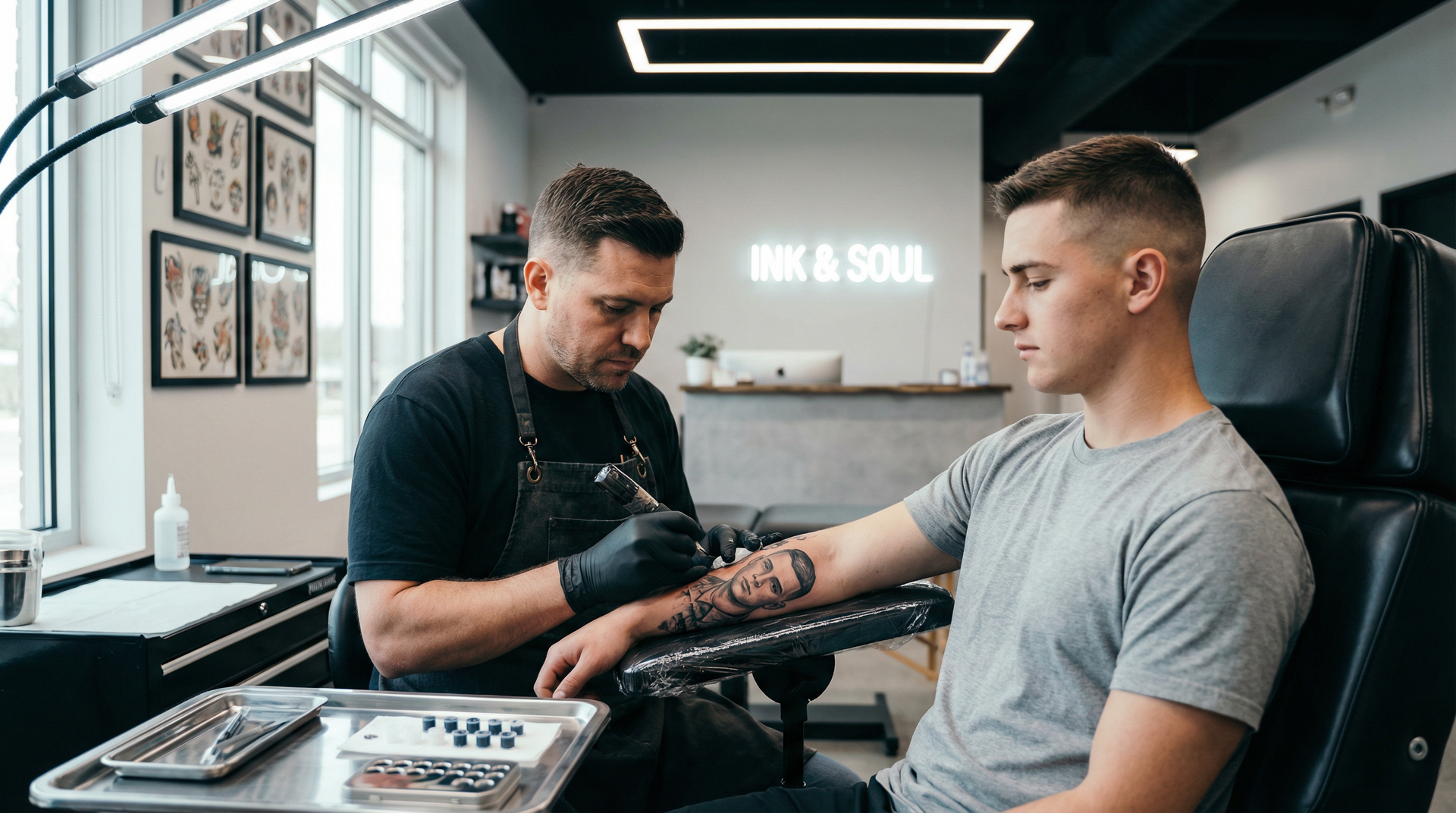
When you search for a tattoo shop near Hunter Army Airfield , you’ll see studios advertising walk-ins, custom work, and same-day availability. The right choice—walk-in vs. appointment—usually comes down to design complexity, placement, and how picky you are about the final details (which, honestly, you should be).
Resurrection Ink offers walk-in tattoos 7 days a week , and you can also lock in a specific day/time with an appointment.
Walk-ins are best when…
Walk-ins are a great fit if you want something you can decide on confidently and finish cleanly in one session—without a long consult process.
Choose a walk-in if your tattoo is:
- Small to medium (think palm-size or smaller)
- Simple linework (script, symbols, small blackwork pieces)
- Flash (pre-drawn designs you can choose from)
- Minimal customization (maybe adjusting size or placement, not redrawing the whole thing)
If you’re on a tight window between duty shifts, walk-ins can be the fastest way to get quality work without weeks of back-and-forth.
Appointments are best when…
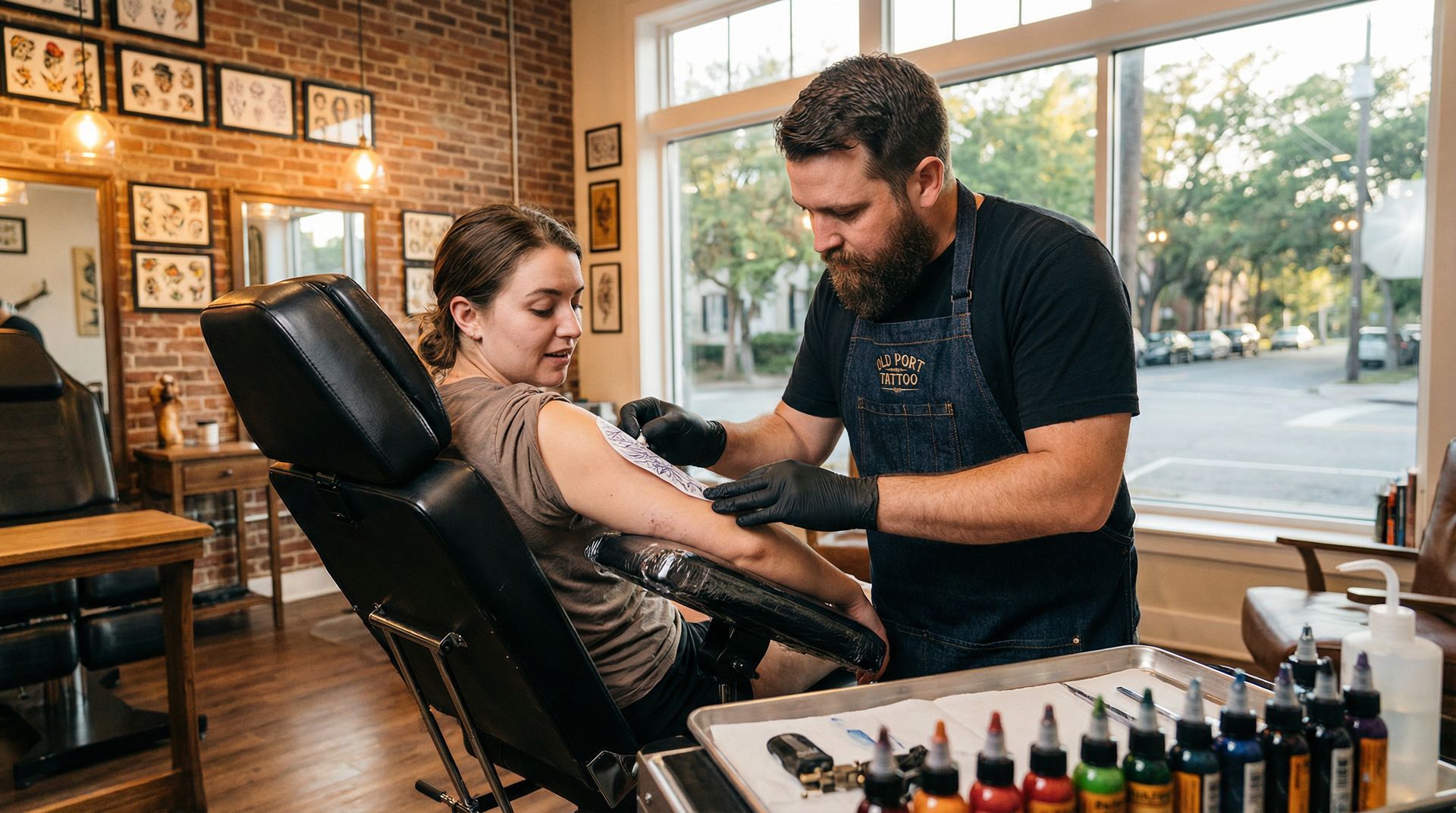
Appointments are for anything that requires planning, drawing time, or a longer sit. If you want a tattoo you’ll still love five years from now, this is where a consultation earns its keep.
Book an appointment if your tattoo includes:
- Custom artwork (built from multiple references or a brand-new concept)
- Large scale pieces (forearm wraps, thigh pieces, half sleeves, etc.)
- High-detail styles like realism or neotraditional
- Cover-ups (these almost always need planning)
- Multiple sessions (color packing, heavy shading, or detailed black-and-gray)
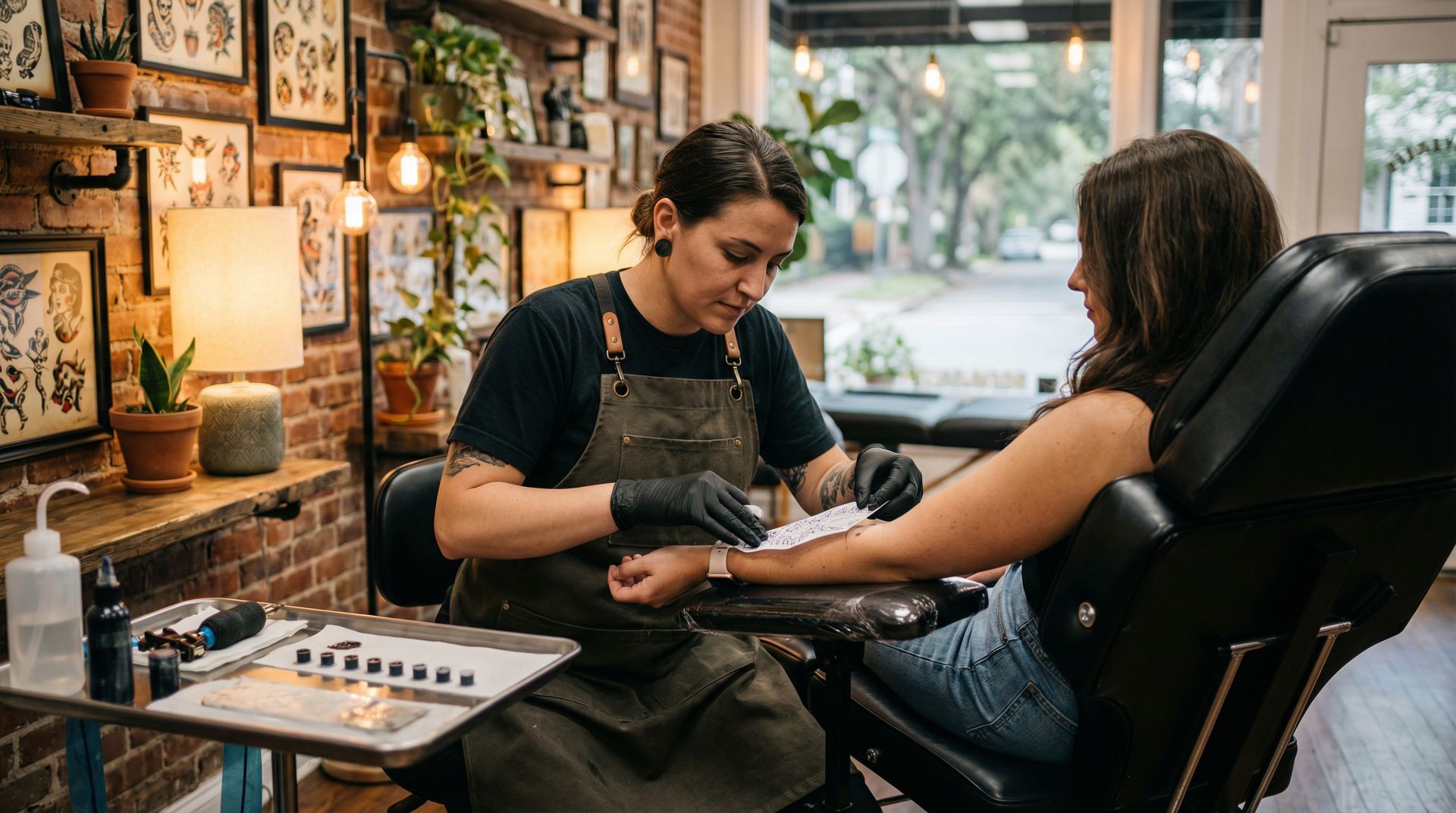
A consult helps you lock in the design direction, choose the smartest placement, and avoid common regrets (like forcing a design into a spot it doesn’t fit).
You can see different styles and get a feel for which artist matches your idea here: meet our artists and style specialties.
How to speed up the process (without sacrificing the tattoo)
Whether you’re walking in or booking a consult, you can save time—and usually get a better result—by showing up prepared. Here are the biggest “speed levers” that don’t cut corners.
1) Bring clear references (and know what you like about them)
Instead of saying “I want something like this,” tell your artist:
- What you like (line weight, shading style, color palette)
- What you don’t like (too busy, too dark, too realistic, etc.)
- Any “must-haves” (names, dates, unit-style symbolism, specific imagery)
A couple of strong reference images beats a 40-photo camera roll every time.
2) Be flexible on placement (especially if you need it to heal fast)
If your schedule is tight, placement can make or break healing. Areas that get constant friction from boots, waistbands, or a duty belt can be harder to heal comfortably.
Generally easier placements for busy schedules:
- Outer upper arm
- Upper back/shoulder blade area
- Outer thigh (if you can keep friction low)
Trickier placements for uniform wear and sweating:
- Inner bicep
- Ribs/side body
- Feet/ankles (boots + friction)
- Waist/hipline (constant waistband rub)
If you’re open to a couple placement options, your artist can help you choose the one that heals the smoothest.
3) Consider flash or “artist-driven” concepts
Flash isn’t “lesser”—it’s just pre-designed . That means:
- Less time drawing
- Faster decision-making
- A design that’s already proven to read well as a tattoo
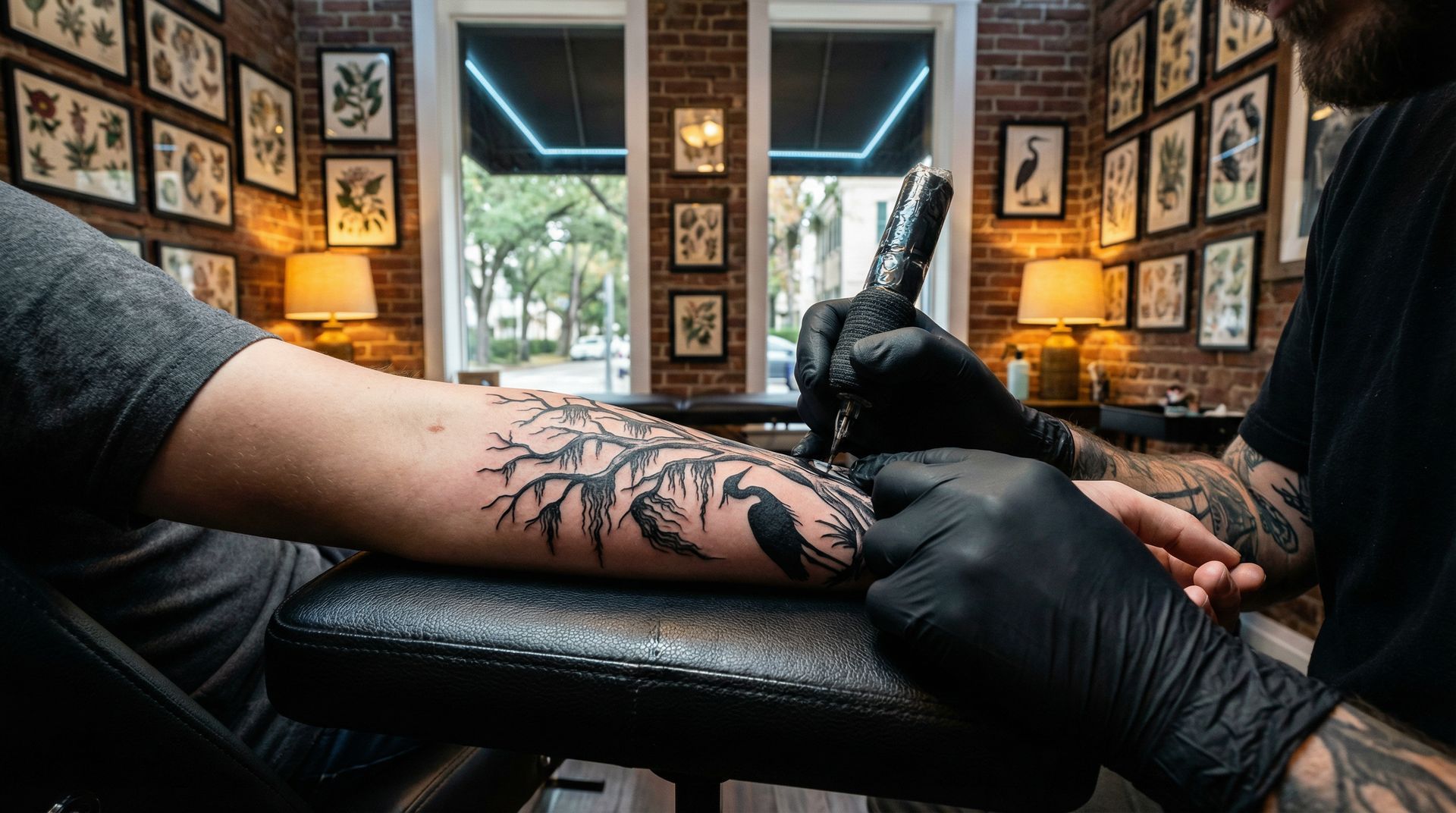
If you want something bold and clean (especially blackwork ), flash can be a perfect match for a walk-in day.
4) Keep the design size realistic for your time
A common mistake is trying to squeeze a detailed idea into a too-small tattoo. That usually forces compromises (less detail, less clarity, or faster aging).
If you want detail, go bigger—or simplify the idea so it still reads clean years from now.
For booking info and what to bring, start here: custom tattoos, walk-ins, and appointments.
Eat a real meal, bring a valid ID, pick 1–3 reference images, wear clothing that exposes the placement, and plan for a few days of lower-friction healing. If you’re on a tight schedule, choose a design that can be finished in one clean session.
Want the fastest path to a clean tattoo near HAAF? Bring references, be flexible on placement, and confirm walk-in vs. appointment ahead of time. Call 912-352-9926 or tap below.
Call Us NowAftercare planning for active schedules (PT, sweating, uniforms, sleep)
A fresh tattoo is basically a controlled wound. You don’t have to baby it forever, but you do need a plan—especially if you’re sweating daily, wearing uniforms, and sleeping hard after early mornings.
The first 24–48 hours: protect it and keep it clean
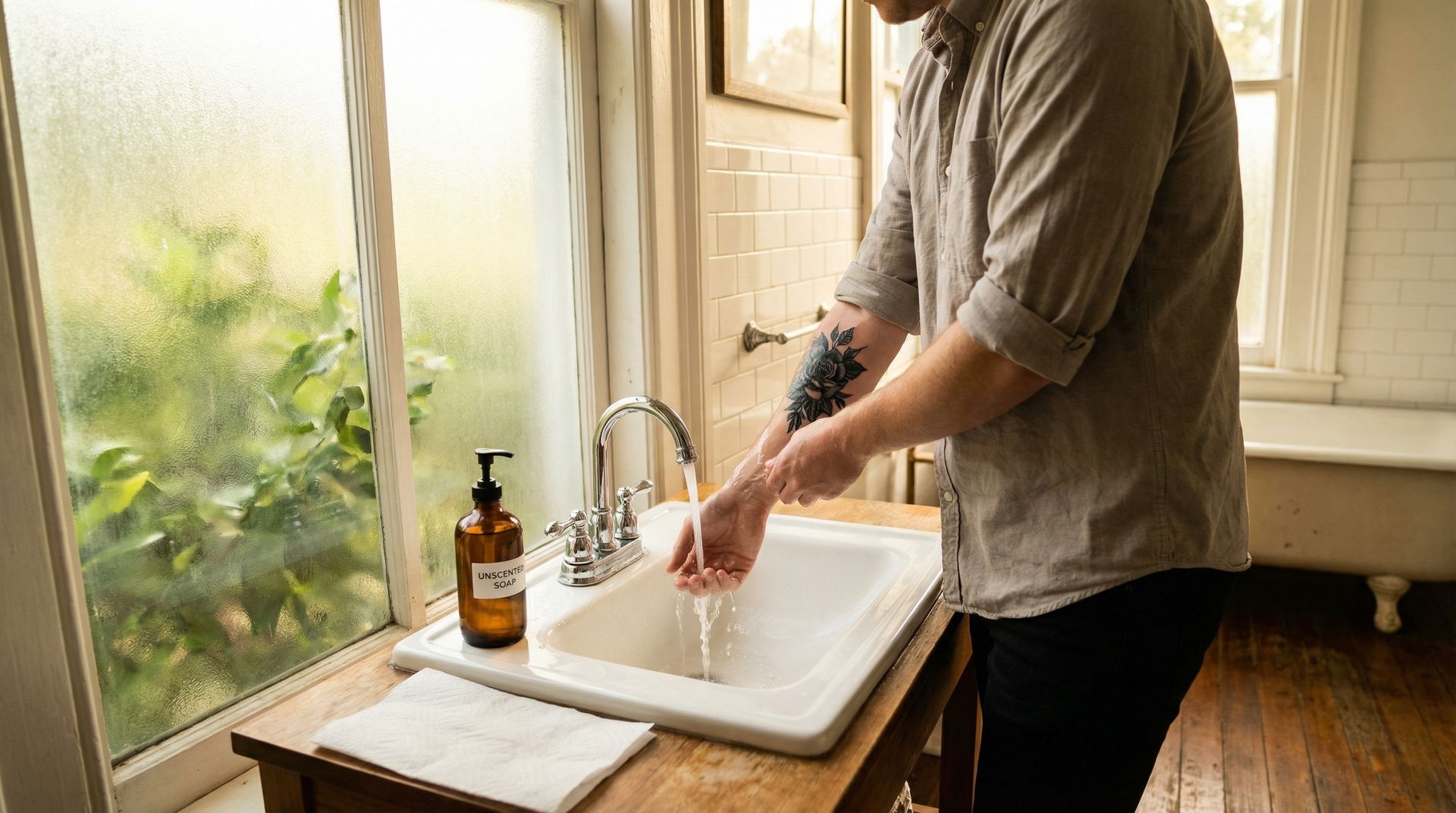
Your artist will give you specific aftercare instructions based on how your tattoo was done and whether you’re using a protective bandage. Follow those instructions exactly, but in general:
- Keep it clean : wash gently with clean hands and mild soap as directed
- Avoid unnecessary touching
- Don’t soak it
- Wear clean, loose clothing around the area
If you’re in uniform soon after, prioritize low friction . A tight sleeve rubbing fresh ink all day can turn an easy heal into an irritated mess.
Working out and sweating: what’s realistic?
You don’t need to become a couch potato, but you do need to be strategic.
For the first 2–3 days , avoid:
- Heavy sweating sessions
- Anything that causes constant rubbing (ruck straps, heavy lifting that drags fabric over the tattoo)
- Shared gym equipment directly contacting the tattooed area (hygiene + friction)
After that , many people can return to lighter workouts if they:
- Keep the tattoo protected from friction
- Avoid direct contact with dirty surfaces
- Clean the tattoo promptly afterward (don’t sit in sweat for hours)
If your tattoo is in a high-friction area (like near a waistband, boots, or a duty belt zone), you may need a longer “light duty” period with training to prevent irritation.
Uniform wear: the friction problem (and how to reduce it)
Uniforms aren’t gentle. Constant movement + rough fabric can irritate a healing tattoo, especially in spots like:
- Ankles/calves under socks and boots
- Waistline under belts/waistbands
- Shoulders under straps or gear
Practical ways to protect it:
- Pick placement with your weekly schedule in mind (not just what looks cool)
- Keep the area clean and dry (sweat trapped under fabric is a common irritation trigger)
- Avoid tight compression over a new tattoo unless your artist specifically recommends a protective approach
Sleeping with a new tattoo (the part nobody plans for)
Sleep is where people accidentally mess up aftercare—mostly from sticking to sheets or grinding the tattoo against fabric.
For the first several nights:
- Sleep in clean sheets
- Avoid sleeping directly on the tattoo if possible
- If the tattoo is in a spot that tends to press or rub, adjust your sleep position or clothing to reduce friction
When is swimming safe?
If you’re stationed near Savannah, the pool, river, and beach are always calling—but soaking is one of the easiest ways to ruin healing.
A practical timeline:
- No swimming while it’s peeling or tender (that’s typically at least the first 2 weeks for many tattoos)
- Safer window: usually around 3–4+ weeks , once the tattoo is fully healed and the surface is intact (no peeling, no shiny “new skin,” no irritation)
Chlorine, saltwater, lakes, and hot tubs all bring different risks, but the bottom line is the same: don’t soak a healing tattoo .
When is heavy friction safest?
Heavy friction (rucking straps, tight gear, repetitive rubbing) is best avoided until:
- Peeling is done
- The tattoo no longer feels tender
- The skin texture looks normal (not shiny, not “raw”)
For many customers, that’s around 10–14 days , but larger pieces and high-saturation work can take longer. If you’re doing realism or dense blackwork, plan for the longer end.
What a professional studio visit should look like (especially if it’s your first tattoo)
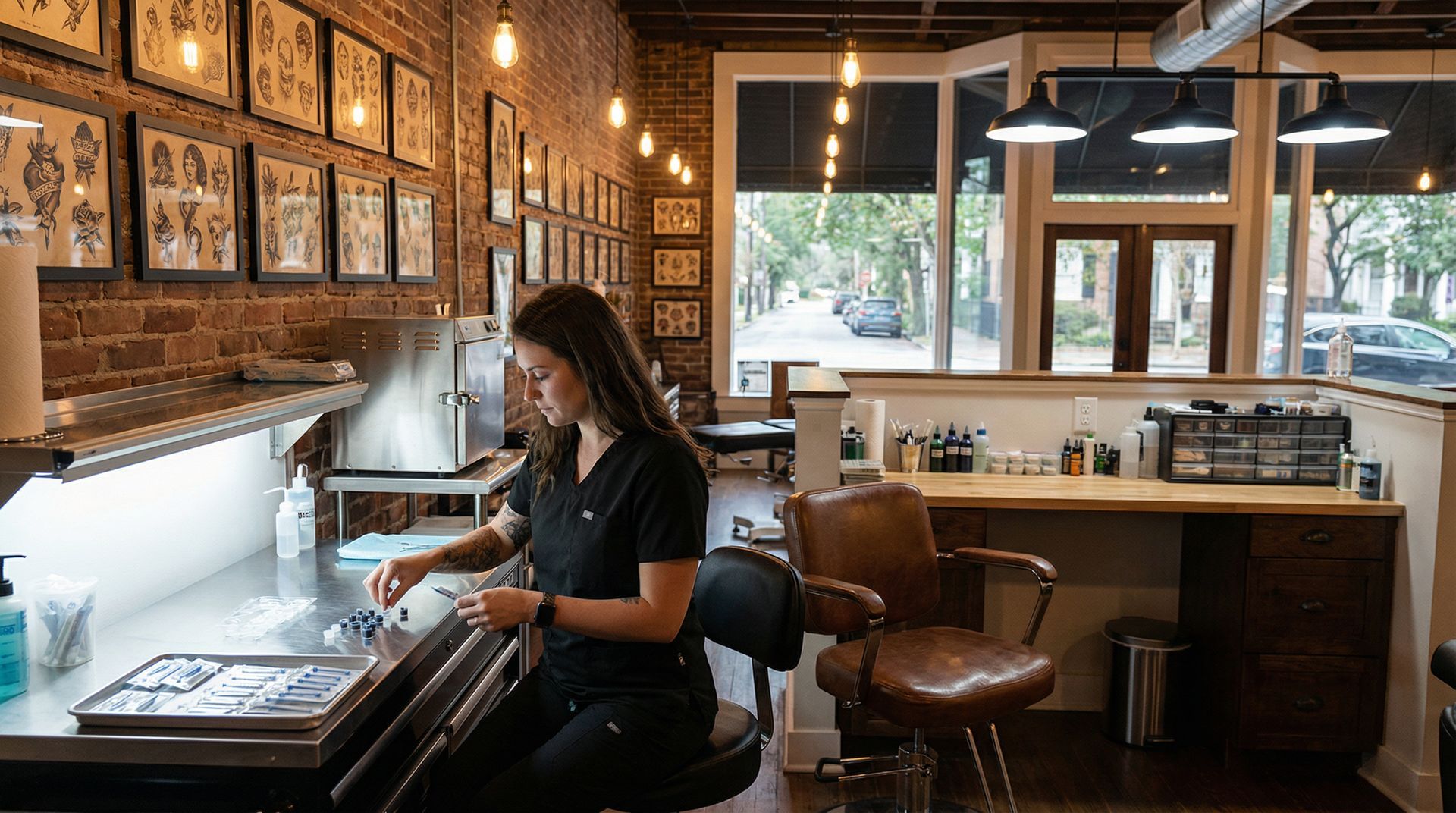
If it’s your first tattoo—or your first one near HAAF—knowing what to expect makes the experience smoother and helps you avoid the “surprise rules” that trip people up.
Deposit policy for appointments (how it works)
For tattoo appointments, Resurrection Ink requires a $100 deposit to secure your time. That deposit applies toward your tattoo , and it’s part of how serious studios protect artists’ schedules and drawing time.
If you’re not sure whether your idea needs an appointment or can be handled as a walk-in, start by checking the booking info here: tattoo booking details and availability.
If you want to lock in time around duty schedules, call and get your options—especially if you’re coordinating around leave days or weekends.
Need help choosing walk-in vs. appointment near HAAF? Call Resurrection Ink at 912-352-9926 or Call Us Now.
Sobriety requirements (yes, it matters)
Professional studios require you to be sober . That’s not just a vibe rule—it’s a safety and consent issue. Alcohol and certain substances can also increase bleeding and complicate the session.
If you’re celebrating something, get tattooed first, celebrate after.
Why consultations prevent regret
A consultation isn’t a sales pitch—it’s where you:
- Confirm placement and sizing (so the tattoo fits your body correctly)
- Talk through style choices (blackwork vs. realism vs. neotraditional, etc.)
- Identify potential issues early (too much detail for the size, problem areas for healing, cover-up constraints)
- Get a realistic plan for timing and sessions
This is especially important if you’re getting something meaningful, something visible, or something you’ll want to expand later.
First-time tattoo tips that actually help
If you’ve never been tattooed before, do these things and your day will go better:
- Eat before you come in (low blood sugar makes you feel awful mid-session)
- Hydrate (but don’t overdo caffeine)
- Dress for placement (make it easy to access the area without awkwardness)
- Plan your next 48 hours (avoid hard training, heavy friction, and swimming)
- Be honest about your schedule (so your artist can guide placement and aftercare)
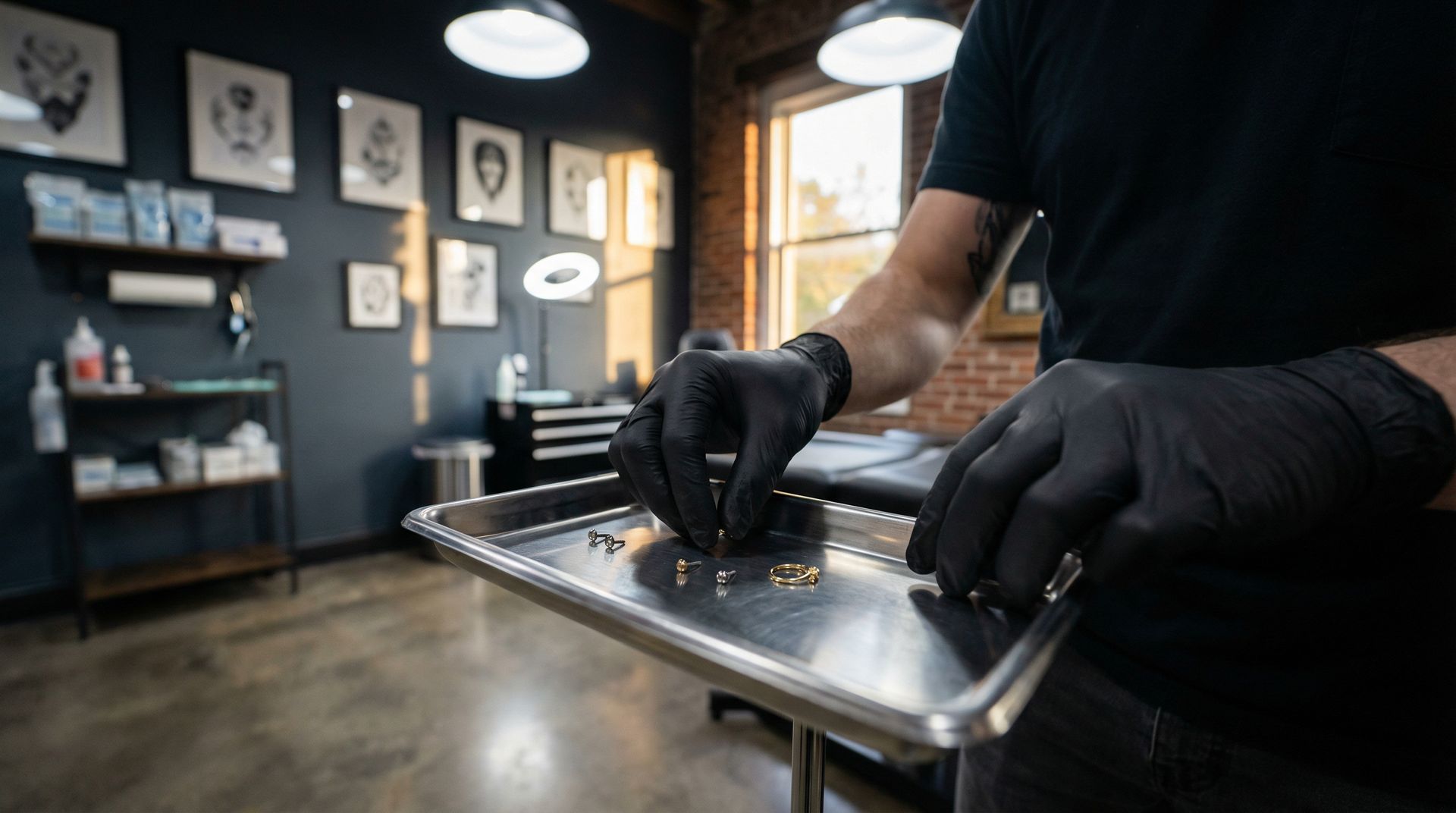
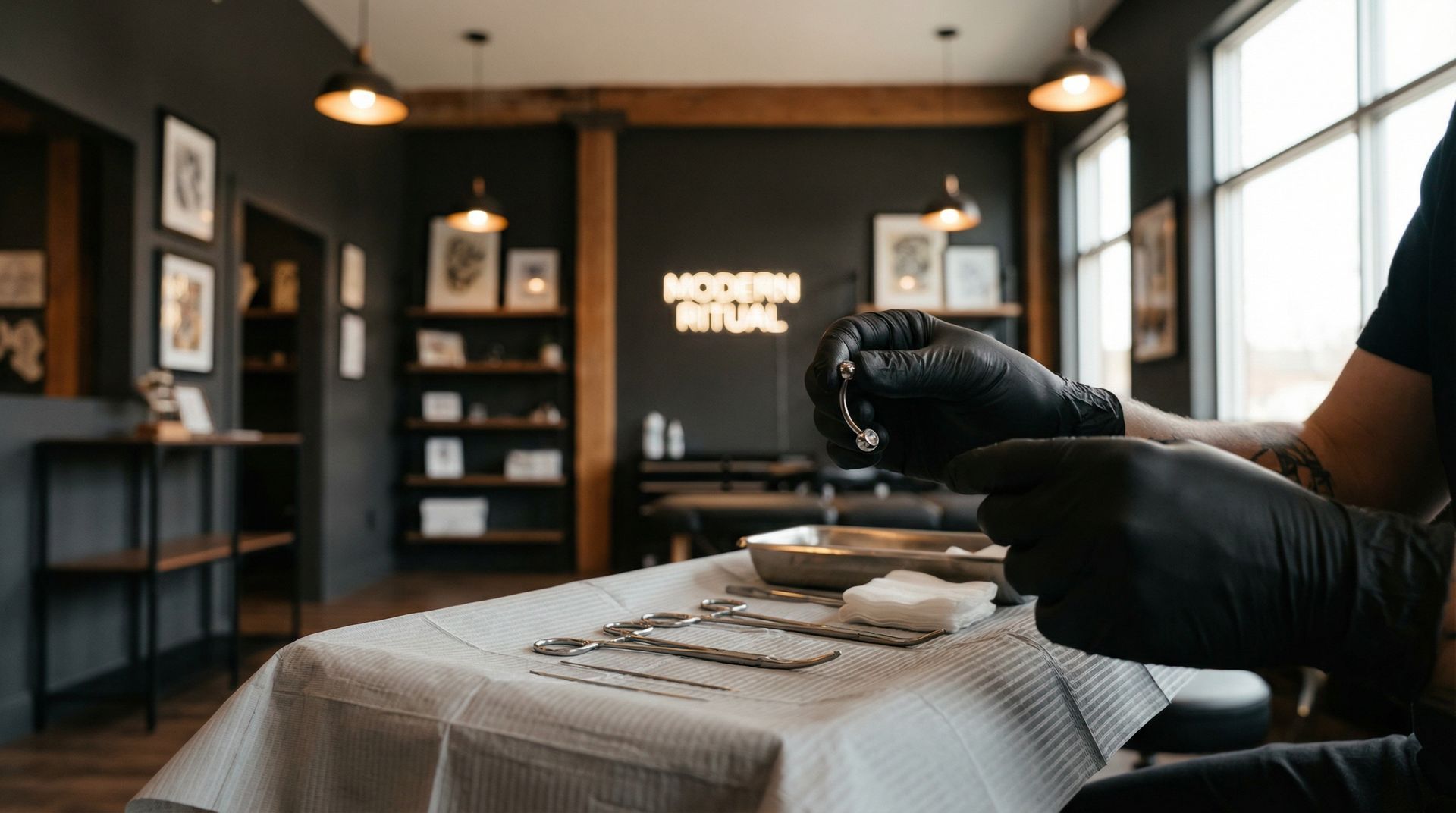
And if you’re thinking about adding a piercing while you’re here, make sure you’re choosing safe materials—quality studios use options like implant-grade surgical steel depending on the piercing and anatomy. You can read about piercing services here: professional body piercing and jewelry options.
Plan it like a pro: a quick schedule-based approach
If your weeks are unpredictable, use this simple approach:
- Pick a day with 48 hours of lower friction afterward (as much as possible)
- Choose placement that won’t get crushed by uniforms/gear
- Match design complexity to your time (flash and smaller pieces are faster; realism and large custom work need appointments)
- Block off swimming for a few weeks, not a few days
- Treat aftercare like part of the tattoo , not an optional add-on
That’s how you get a tattoo you’re proud of and a heal that doesn’t turn into a hassle.
Ready when you are
If you’re looking for a tattoo shop near Hunter Army Airfield, the best move is to think through two things: how much time your design needs (walk-in vs. appointment) and how your schedule will affect healing (PT, uniforms, sleep, and swimming). When you plan both, you’re way more likely to end up with clean work and a smooth recovery.
Near HAAF and ready to book? Call Resurrection Ink at 912-352-9926 or schedule online.
Call Us Now