Nose Piercing Aftercare: What’s Normal, What’s Not, and How to Heal Without the Panic
Your new nose piercing felt quick—but the healing surprises can make you panic fast. One day it’s fine, the next you’ve got swelling, a snag from your towel, or a mystery bump that makes you wonder if you messed it up.
This guide covers what actually matters: normal healing vs. red flags, a simple daily routine, and jewelry choices that can make or break your heal—especially with Savannah heat, humidity, and allergy season in the mix.
Call Us Now at 912-352-9926 or visit https://www.resurrectionink.com/tattoos for guidance and walk-in info.
If you want nose piercing aftercare with no guesswork, here’s what actually matters: how healing works, what’s normal (and what isn’t), the daily routine that prevents irritation, and how jewelry choices can make or break your heal—especially with Savannah’s heat, humidity, and allergy season doing the most.
You can also check our piercing info here: body piercing services and aftercare basics
Healing basics: what’s normal (nostril vs. septum), and what’s outdated advice
Nostril vs. septum healing timelines (realistic expectations)
Nose piercings heal from the outside in. That means the hole can look “fine” early on while the inside is still rebuilding tissue. Timelines vary by your body, your jewelry, and how much the piercing gets bumped around.
Typical healing ranges:
- Nostril piercing: ~4–6 months for most customers (sometimes longer if it’s irritated repeatedly)
- Septum piercing (through the sweet spot):
~2–3 months for most customers
If it was placed through cartilage instead of the sweet spot, expect a tougher heal and more soreness—get it checked.
Even after those windows, it’s normal for a piercing to be a little temperamental for a while. “Healed” doesn’t mean “invincible.”
What swelling, crust, and discharge actually mean
A fresh piercing is a controlled wound. Your body responds with inflammation and healing fluid.
Normal early-stage stuff:
- Mild to moderate swelling (especially first 3–7 days)
- Pink/redness close to the entry points
- Clear or pale-yellow fluid that dries into “crusties” (lymph)
- Tenderness when you accidentally bump it
- Occasional itching as it heals
Not normal (or at least worth a check):
- Worsening swelling after the first week
- Thick, opaque yellow/green discharge with a strong odor
- Hot, spreading redness, intense throbbing pain
- Fever, chills, red streaking on skin
- Jewelry feeling “stuck,” sinking in, or embedding
Why “turn the jewelry” is outdated (and usually makes things worse)
You might still hear old advice like “spin it so it doesn’t stick.” That guidance comes from the era of harsh antiseptics and lower-quality jewelry.
Here’s the problem: turning jewelry tears fragile healing tissue inside the channel. That irritation keeps the piercing stuck in a loop: inflammation → swelling → more discharge → more crust → more movement → more irritation.
What you want instead is stability . A calm, still piercing heals faster and with fewer bumps.
Why irritation bumps are so common on nose piercings
Most “bumps” people panic about are irritation bumps (hypergranulation/hypertrophic scarring behavior), not infections and not true k*loids.
Common causes:
- Too much movement (snagging, twisting, sleeping on it)
- Jewelry that’s too long or the wrong style for healing
- Switching jewelry too early
- Over-cleaning or using harsh products
- Makeup/skincare migrating into the piercing
- Pressure from glasses, masks, or helmets
The good news: when you remove the cause and keep aftercare consistent, most irritation bumps calm down.
The aftercare routine: exactly what to do (and what to stop doing)
Your daily routine (simple, consistent, effective)
For nose piercing aftercare, the goal is clean + dry + undisturbed.
Use sterile saline (0.9% sodium chloride)
- Look for wound wash saline in a pressurized can
- Ingredients should be basically: water + sodium chloride
- No additives, no “piercing aftercare” mystery blends
How often:
- 2 times per day is the sweet spot for most people
- If you’re sweating a lot (Savannah summer) or you work a dusty job, you can rinse in the shower as needed—but don’t go wild with saline 6–8 times a day. Over-cleaning can dry and irritate tissue.
How to apply:
- Spray saline onto the piercing area or saturate clean gauze/paper towel
- Hold a gentle compress for 2–3 minutes
- Let crust soften, then wipe only what lifts easily
- Do not dig for crust that’s glued on—leave it for the next cleaning
How to dry (this matters more than people think):
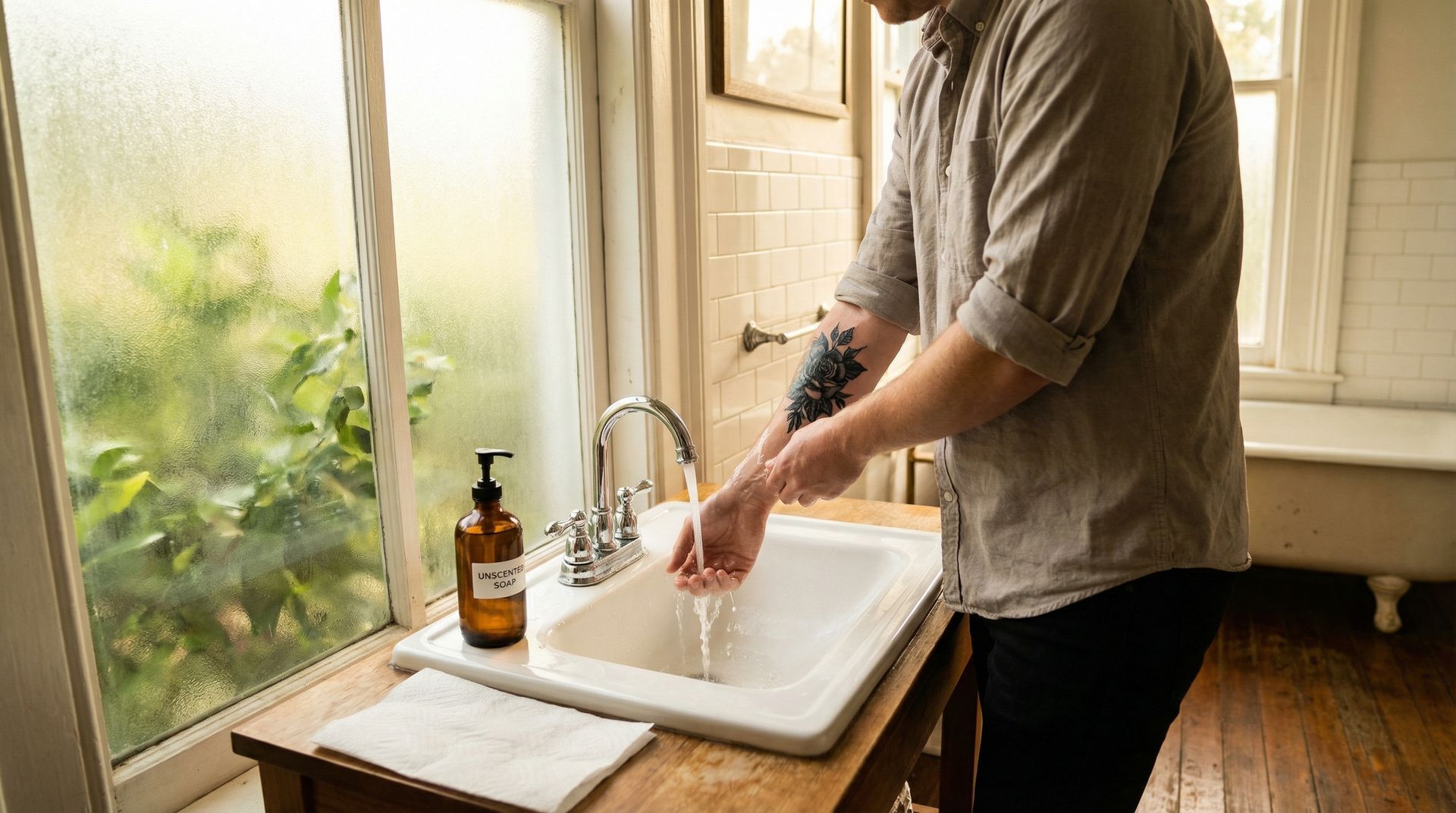
- Pat dry with clean paper towel or gauze
- Avoid cloth towels (they snag and carry bacteria)
- Avoid letting it stay damp—constant moisture can trigger irritation bumps
The fastest heals come from stable jewelry, gentle saline, and leaving it alone. Most irritation comes from over-handling: twisting, checking it constantly, and swapping products every few days.
What to avoid putting on a healing nose piercing
These are the usual culprits behind dryness, bumps, and delayed healing:
- Alcohol / rubbing alcohol
- Hydrogen peroxide
- Betadine/iodine (unless directed by a medical professional for a specific reason)
- Ointments (they can trap bacteria and block airflow)
- Tea tree oil (too harsh; chemical burn risk)
- Homemade salt water (often too strong and irritating)
If you’ve already used one of these and things look angry, don’t panic—switch to sterile saline, stop touching it, and get your jewelry checked for fit.
Makeup + skincare precautions (the sneaky irritators)
Nostril piercings sit right in the splash zone for skincare, sunscreen, and makeup.
Do this:
- Apply skincare first, let it fully dry, then carefully clean around the piercing
- Keep foundation/concealer/powder off the entry points
- Use a clean brush/sponge (not yesterday’s makeup tool)
- Be cautious with retinoids, benzoyl peroxide, AHAs/BHAs —they migrate and can irritate the piercing channel
If you’re breaking out around the piercing, resist the urge to spot-treat right next to it. Treat the surrounding area carefully and keep the piercing itself on saline only.
Sleeping positions: how to avoid pressure and accidental trauma
Pressure is a major reason nose piercings stay swollen or develop bumps.
Best practices:
- Sleep on your back if you can
- If you’re a side sleeper, use a travel pillow so your nose “floats” in the center
- Keep your pillowcase clean (especially if you have pets)
If you wake up and it’s sore every morning, that’s a huge sign you’re putting pressure on it at night.
Masks, glasses, helmets, and snag prevention (real life in Savannah)
Nose piercings don’t heal in a vacuum—life happens. Here’s how to protect it.
Masks:
- Choose a mask with structure so it doesn’t rub your nostril constantly
- If you’re masking daily at work, keep spare clean masks and avoid re-wearing sweaty ones
- Put the mask on/off slowly—this is where most snags happen
Glasses/sunglasses:
- Clean the nose pads daily
- Make sure frames aren’t pressing directly on a fresh nostril piercing
- If your piercing sits right where your frames rest, come in for a jewelry check—sometimes a different top or fit makes all the difference
Helmets (bikes, motorcycles, certain jobs):
- Slow down when putting it on/off
- Clean the interior padding regularly
- Avoid a helmet that compresses the piercing area—constant pressure can keep it irritated
General snag prevention:
- Be careful with towels after showers (pat, don’t rub)
- Watch hairbrushes, hair wraps, and hoodie strings
- Change shirts slowly, especially tight collars
Also: avoid pools, hot tubs, rivers, and ocean while it’s healing. Between bacteria and chemical irritation, it’s not worth the setback—especially with quick weekend trips to the beach tempting you.
If you’re dealing with swelling, snags, or a bump that won’t calm down, we can help you troubleshoot aftercare and confirm the right jewelry size for healing.
Jewelry choices that affect healing (more than you think)
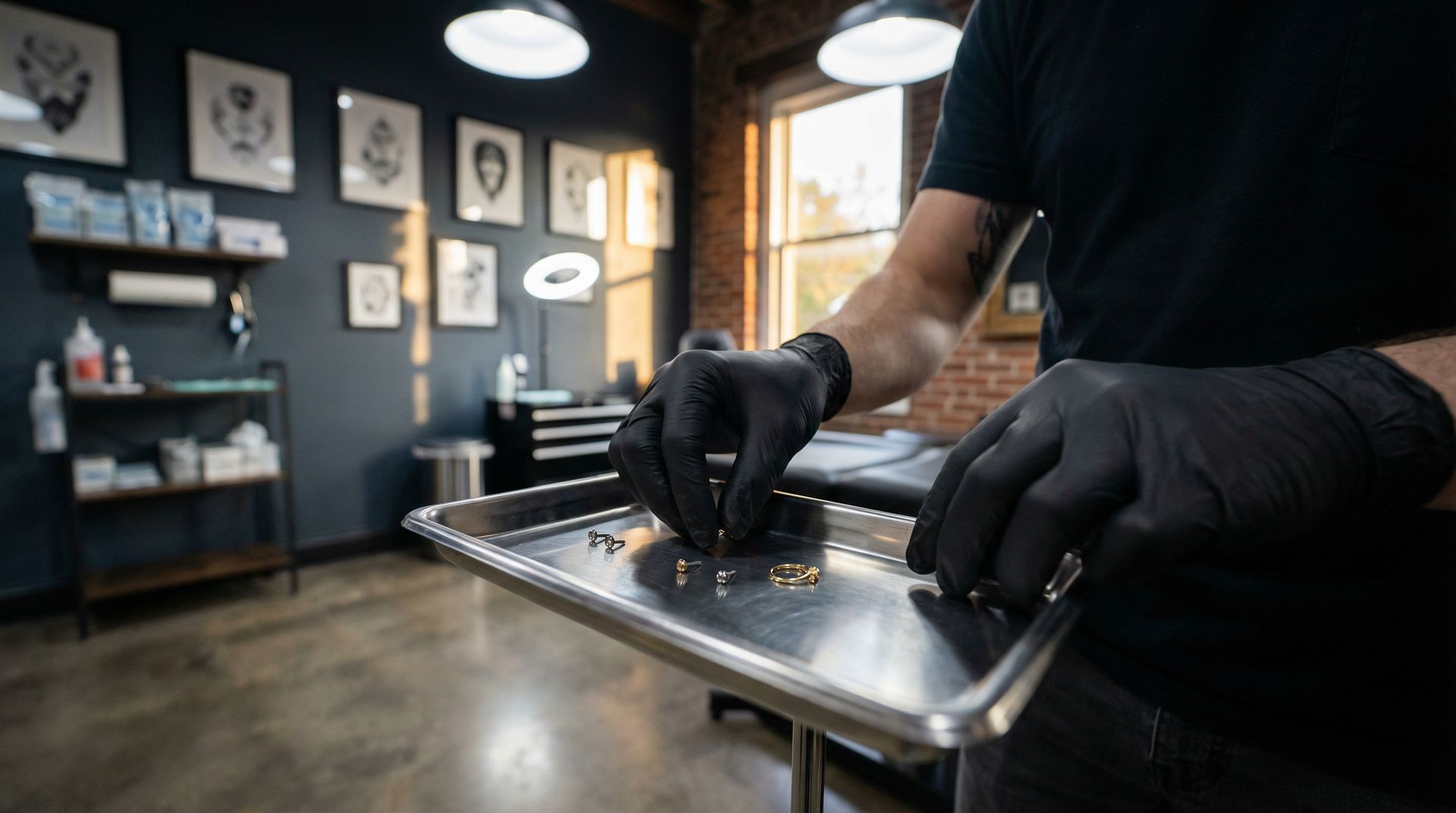
Materials: what you want in your nose while it heals
If your body is trying to heal around low-quality metal, it can stay inflamed.
Look for:
- Implant-grade surgical steel
- Implant-grade titanium (common choice for sensitive skin)
- Niobium
- Solid 14k+ gold from reputable body jewelry lines (not plated)
Avoid:
- Plated jewelry
- Mystery metal from online packs
- Sterling silver for healing piercings (can tarnish and irritate)
Style + fit: why the “right” jewelry makes aftercare easier
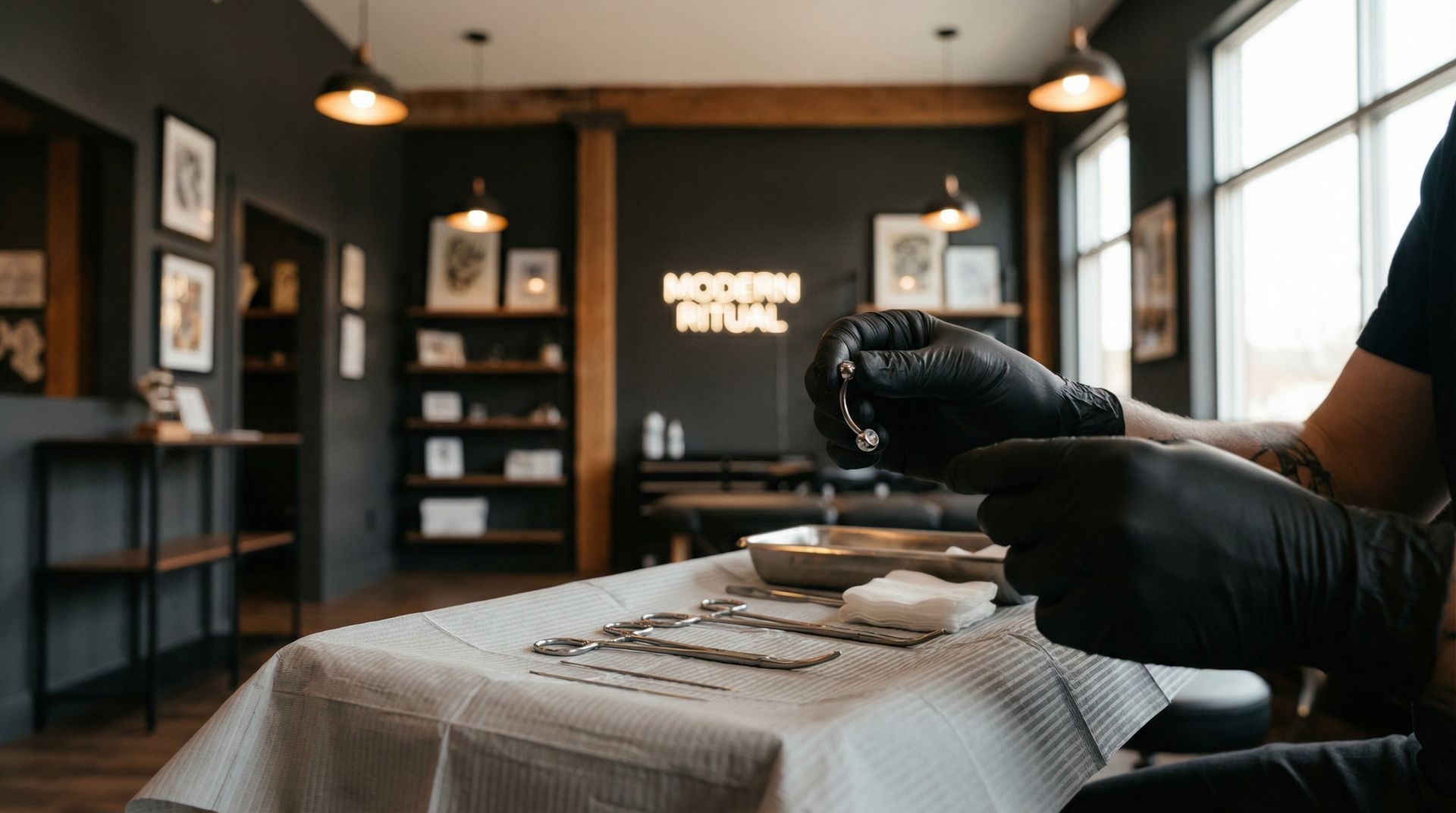
For fresh nostril piercings, stable jewelry is your best friend. In most cases, a properly fitted flatback/labret-style stud keeps movement down and reduces snag risk compared to certain nostril screws or L-bends (depending on anatomy and placement).
For septums, a correctly sized circular barbell/horseshoe or captive bead ring is common—what matters most is proper placement and appropriate diameter so it isn’t pulling or flipping constantly.
If your jewelry is:
- Too long: it moves more, catches more, and can trigger bumps
- Too tight: it can pinch, swell, and in worst cases start embedding
Downsizing: the step people skip (and then wonder why the bump won’t go away)
Swelling early on is normal, so initial jewelry is often chosen with a bit of extra room. Once swelling drops, that extra length can become a problem because it lets the jewelry shift back and forth.
Downsizing (switching to a shorter post or better-fitting piece) is often recommended around 2–6 weeks , depending on how you’re healing.
If you’ve got a persistent irritation bump and your jewelry has obvious extra length, a check and downsize can be the turning point.
Need someone to look at the fit and calm the guesswork? Call Us Now at 912-352-9926 or visit https://www.resurrectionink.com/tattoos to get walk-in piercing guidance.
Troubleshooting: bumps, redness, and when it’s time for medical care
If you have a bump
Run through this checklist:
- Stop touching it (no twisting, no picking crust, no frequent “checking”)
- Confirm you’re using sterile saline only (no peroxide, alcohol, ointment, tea tree)
- Assess pressure and snags (sleeping on it? masks rubbing? glasses pressing?)
- Check jewelry fit and quality (too long? wrong style? questionable metal?)
- Be consistent for 1–2 weeks (bumps don’t vanish overnight)
Most irritation bumps respond to reduced movement + correct jewelry + steady aftercare.
If it’s red and angry
Some redness is normal early. What matters is the trend.
- Improving day by day: likely normal healing
- Getting worse after initial week: usually irritation, pressure, or jewelry issues
- Hot, spreading redness + increasing pain: could be infection—don’t wait
When to seek medical evaluation
Piercers can help with jewelry fit, aftercare adjustments, and irritation troubleshooting—but medical pros are the right call if you have signs of systemic infection or serious local infection.
Seek medical care if you notice:
- Fever/chills
- Red streaking
- Rapidly spreading redness
- Severe swelling that compromises breathing through the nostril
- Thick pus and worsening pain
- Embedded jewelry you cannot move at all
One important note: don’t remove jewelry if you suspect infection unless a medical professional directs you to. Removing it can trap infection inside as the surface closes.
A smooth heal is mostly about consistency (and getting ahead of small problems)
If you keep your routine simple, protect it from pressure, and make sure your jewelry is high-quality and properly fitted, nose piercings usually heal without drama—even when life includes sweaty Savannah afternoons, allergy flare-ups, and the occasional unavoidable mask day.
If your piercing is irritated, you think your jewelry needs a downsize, or you just want the guesswork gone: Call Us Now at 912-352-9926 or visit https://www.resurrectionink.com/tattoos for guidance and walk-in piercing info.