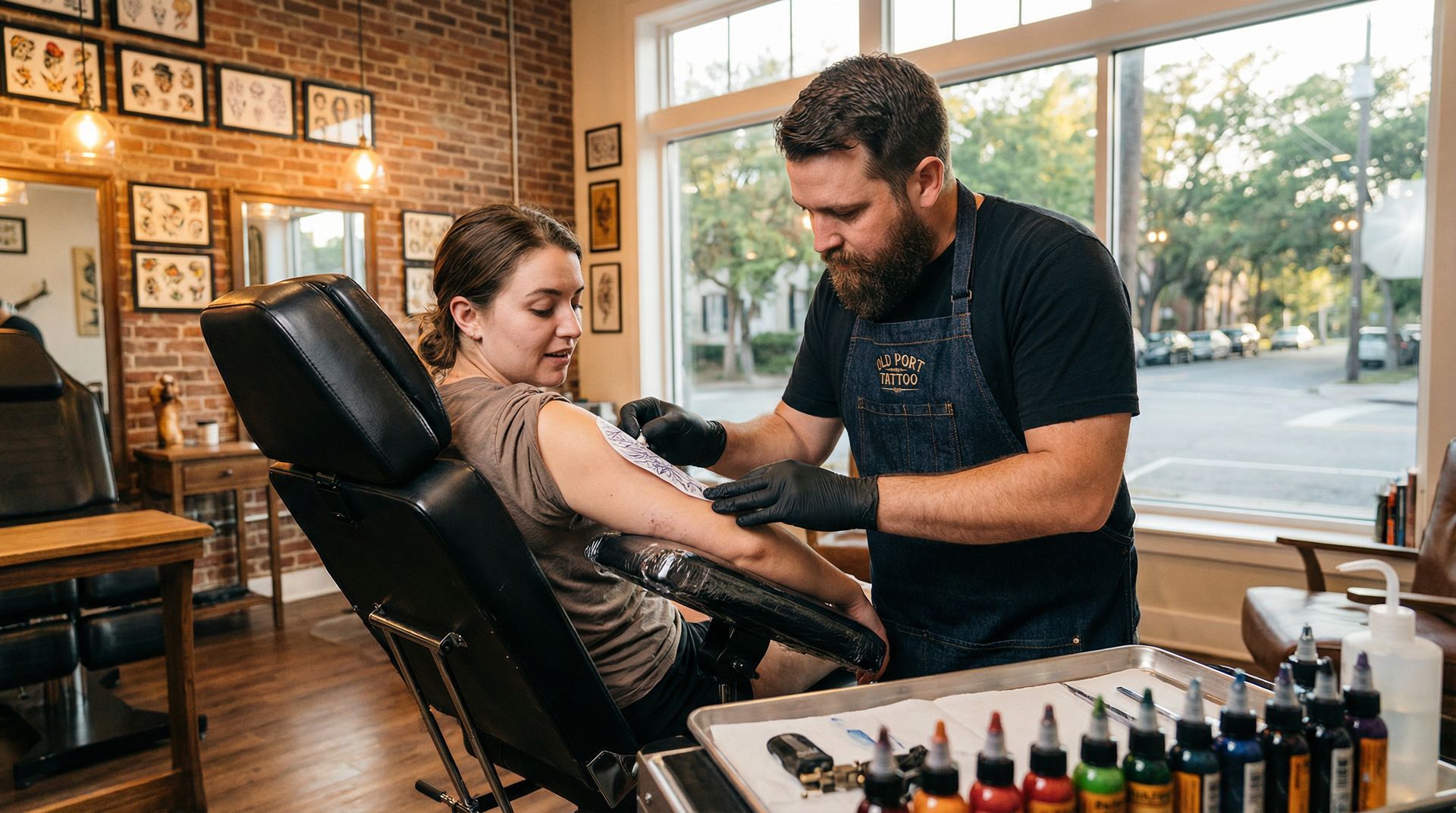
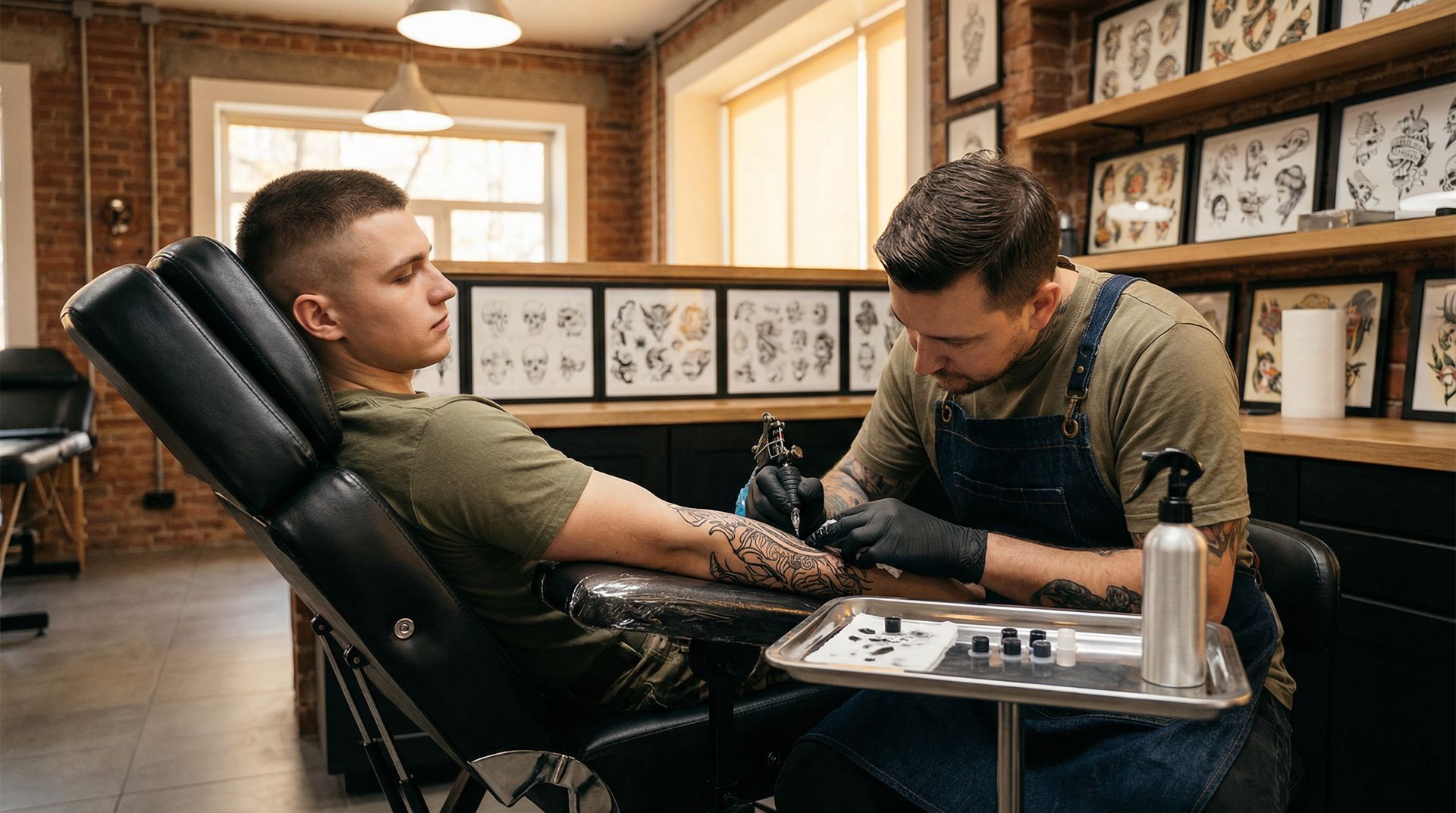
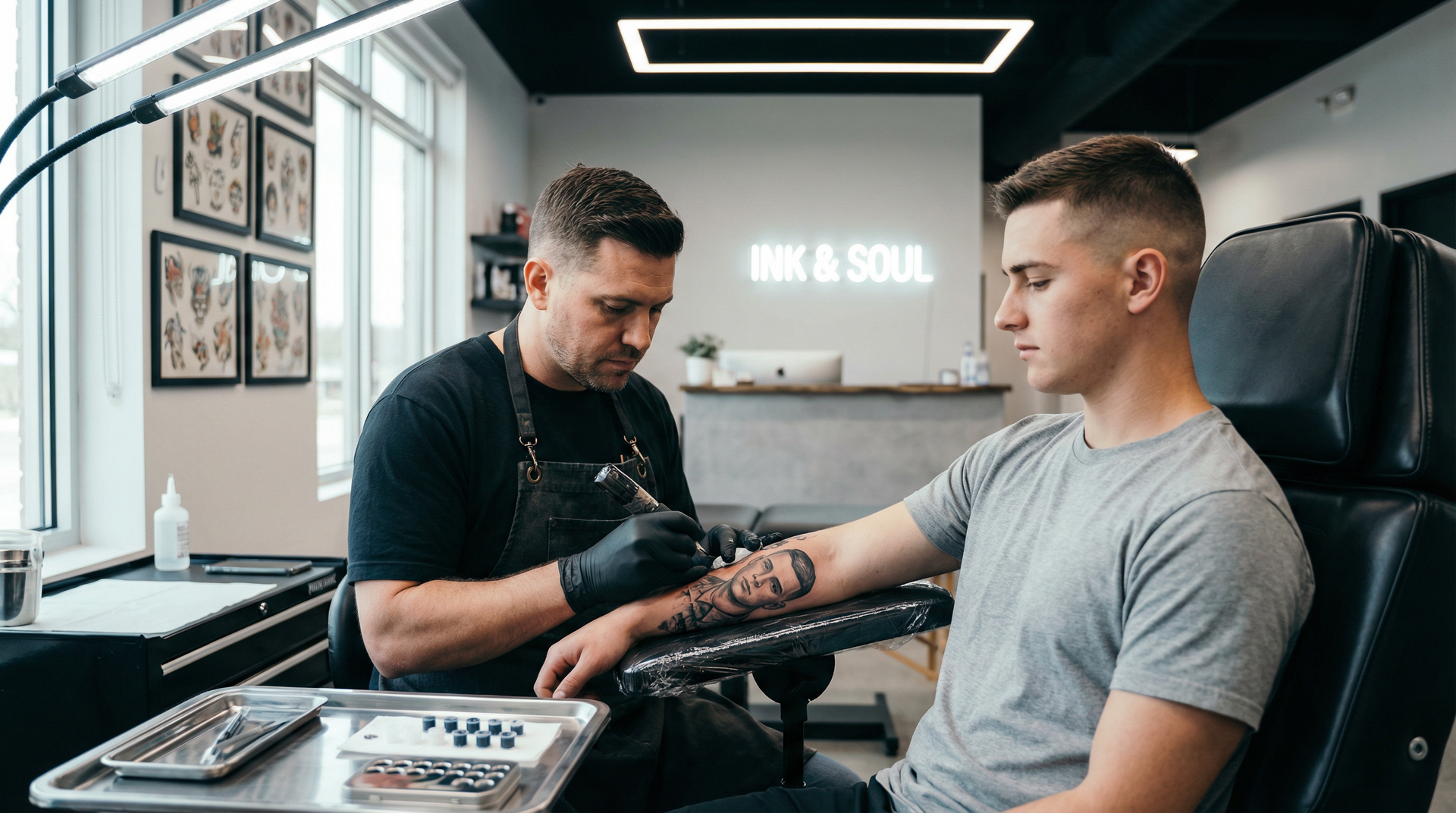
Best Time to Get a Tattoo in Savannah: How to Plan Around Heat, Sun, Travel, and Healing
You’ve finally landed on the idea—placement, vibe, maybe even the style (blackwork? neotraditional? realism?)—but the real stress hits when you look at your calendar. Savannah heat and humidity, riverfront walking, Tybee days, weddings, travel weekends, gym routines, work uniforms… it’s a lot to juggle when a fresh tattoo needs consistent aftercare to heal clean.
Call us and we’ll help you pick a healing-friendly window that fits your schedule in Savannah.
Getting the best time to get a tattoo in Savannah isn’t about finding a magical month. It’s about picking a healing-friendly window —a stretch of time where you can protect the tattoo from sun, soaking, sweat, and friction long enough for your skin to do its job.
If you’re still narrowing down what you want (or you want to match your idea to an artist who specializes in your style), start here: Meet the artists and see styles
What “best time to get a tattoo” really means (Savannah reality check)
A “good” time to get tattooed is when you can reliably follow aftercare for the first 2–3+ weeks —and especially the first several days—without constantly having to improvise.
In practical terms, you want a window where you can:
- Keep it clean (gentle wash, clean hands, clean towels, clean sheets)
- Keep it protected (no sun exposure, no soaking—pool, ocean, hot tub are all a no)
- Avoid friction (tight waistbands, sports bras, backpacks, duty belts, boots, uniforms)
- Manage sweat (especially on larger pieces and high-movement placements)
- Stay consistent (travel and “just this once” weekends are where people slip)
Savannah adds a few extra complications:
- Humidity can keep skin damp longer, especially under clothing
- UV is strong even when it feels breezy downtown or on Tybee
- Social plans pop up fast—riverfront strolls, beach invites, festivals, day trips
So instead of asking “What’s the best month?” ask: “When do I have two clean weeks to act like I’m healing a tattoo on purpose?”
Season-by-season planning: what Savannah weather does to aftercare
Summer (June–September): doable, but you have to plan tighter
Summer isn’t automatically a “no,” but it’s the season where you’ll work the hardest to protect your tattoo. Your three biggest enemies show up at the same time: sweat, sun, and water .
What changes in summer
- You may need an extra gentle wash if you’re sweating (without over-washing)
- Loose, breathable clothing matters more (less rubbing + less trapped moisture)
- You’ll need stricter sun habits because you’ll be outside more than you think
Main risks
- Sun exposure: UV can irritate healing skin and set you up for early fading
- Swimming/soaking: Ocean, pool, hot tub—“just wading” still counts
- Heat rash + friction: thighs, waistband, under bra bands, boots, work gear
Summer-friendly strategies that actually work
- Pick a placement that stays covered in light clothing (upper arm under a loose tee, thigh under breathable shorts that don’t rub)
- Schedule when you can keep your routine calm for a few days—especially if you’re getting a larger piece
- If you know Tybee is happening, get tattooed after your beach weekend, not before
If your summer is basically “water every weekend,” it’s usually smarter to wait until you can realistically follow aftercare without exceptions.
Fall (October–November): one of the easiest healing seasons
Fall is a strong contender for Savannah’s easiest healing window. You’re not fighting constant sweat, UV intensity typically feels less aggressive, and covering your tattoo is more comfortable.
Why fall works
- Less sweating = less irritation and less temptation to “rinse it off” all day
- Easier to wear breathable layers without overheating
- Fewer spontaneous pool/beach invites compared to peak summer
Fall is also ideal if you’re planning something bigger—like a sleeve start, a back piece, or a realism project that will take multiple sessions—because you can build momentum without summer getting in the way.
Winter (December–February): great for sun avoidance—watch friction and dryness
Winter in Savannah is often a great time to tattoo because staying covered is easy, and avoiding direct sunlight is simpler. The trade-off is friction from clothing and dry skin .
Winter-specific issues
- Friction: denim, leggings, hoodies, uniform fabrics, boots, and duty gear can rub all day
- Dryness: healing skin can feel tighter and itchier (itching is normal; scratching is where people do damage)
How to make winter work
- Plan placement around what you wear daily (if a duty belt sits on that area for 10 hours, don’t tattoo directly under it right before a long stretch of shifts)
- Use soft, clean layers against the tattoo during the first days
- Keep your bedding and towels extra clean—fresh tattoos don’t need extra bacteria in the mix
Winter can be especially comfortable for tattoos you’d rather keep out of the sun while they settle—ribs, back, torso pieces, and anything you’ll naturally keep covered.
Spring (March–May): comfortable weather, but your schedule gets busy fast
Spring feels perfect—until you realize your weekends are stacked. The weather is often comfortable for healing, but spring is loaded with plans: weddings, graduations, trips, festivals, and the first “let’s go to Tybee” days.
Spring’s real challenge is your calendar
- Travel means unfamiliar sheets, different routines, and more chances to forget aftercare basics
- Events mean you may want to wear outfits that rub the tattoo—or expose it to sun
- Outdoor time ramps up fast, and so does accidental UV exposure
Spring is a great time to get tattooed if you pick your date around what’s already coming up , not around what you hope you’ll skip.
The lifestyle stuff that actually decides whether you heal clean
Use the “two-week rule” for sun + soaking
You’ll avoid a lot of problems if you plan around one simple guideline:
Block off 14 full days after your session where you won’t swim (pool/ocean/hot tub) and you won’t get “accidental sun” from long walks, patios, or beach hangs. If your lifestyle can’t support two clean weeks, change the date—don’t gamble with healing.
Bigger pieces, heavy saturation, or placements that move constantly (inner bicep, ribs, feet, hands, waistband areas) can need more buffer. The goal isn’t just avoiding infection risk—it's also avoiding irritation that can make healing look rougher than it needs to.
Planning around weddings, photos, and formal events
If you’ve got a wedding, engagement photos, graduation pictures, or any professional shoot coming up, timing matters.
A fresh tattoo can be:
- peeling,
- shiny,
- slightly raised,
- or in that “it’s healing but not fully settled” stage.
If the tattoo will be visible in formalwear, you’ve got two smart options:
- 3–6+ weeks before the event (so it’s calm and settled), or
- Right after the event (so you’re not stressed and rushing healing)
Trying to squeeze a tattoo in right before a big day is where people start bending aftercare rules—and that’s when you’re most likely to regret the timing.
Work uniforms, duty gear, and long shifts
If your job includes tight uniforms, belts, straps, boots, or long hours where you can’t adjust clothing often, friction becomes your biggest enemy.
Think about:
- where your waistband sits,
- where a backpack strap rides,
- where a sports bra band presses,
- where your work apron ties,
- whether you’re on your feet sweating for hours.
This doesn’t mean you can’t get tattooed—you just want a placement and a date that won’t set you up to fight your own gear every day.
Gym cycles, sports, and outdoor work
If you train hard or work outside, plan your appointment like you plan recovery:
- Avoid booking right before a heavy training block
- Consider where equipment rubs (lifting belts, knee sleeves, gloves, shin guards)
- Expect sweat management to be a real part of aftercare, especially early on
You don’t always have to stop moving completely—but the first several days are not the time to test how tough your skin is.
Booking strategy: how to pick a date you won’t regret
Start with a consultation (even if you’re sure about your idea)
A quick consultation helps you lock in the details that affect healing:
- placement and sizing that fits your anatomy
- style choices (blackwork vs. neotraditional vs. realism)
- whether your idea is best as one session or multiple sessions
- how to time it around your schedule and Savannah weather
You can also decide whether you’re better off with a walk-in or an appointment . Walk-in tattoos and piercings being available 7 days a week is perfect when you’ve got a random free day and a simple idea. For larger custom work, an appointment is usually the smoother route.
For the basics on custom work and scheduling, check: Custom tattoo booking info
Call 912-352-9926 and we’ll help you plan around Savannah heat, travel, uniforms, and healing time.
Understand the deposit (and why it matters for timing)
If you’re booking a tattoo appointment, there’s a $100 deposit required to secure your spot , and it applies toward your tattoo. That deposit is what locks in your time—especially important when you’re coordinating around travel, field time, overtime weeks, or multi-session projects.
From a planning standpoint, deposits also help you commit to the thing that actually makes tattoos heal well: a stable window you can protect .
Multi-session tattoos: build a “season,” not a single day
If you’re starting a sleeve, a back piece, or a larger realism project, the best results usually come from consistent scheduling with smart healing buffers.
A simple approach that works well in Savannah:
- Start during a season when you’ll naturally avoid sun and soaking (fall and winter are popular for a reason)
- Space sessions with enough time for your skin to calm down
- Leave buffer weeks for life (work spikes, travel, getting sick, unexpected obligations)
Consistency beats intensity. Rushing sessions too close together—or stacking them around vacations—tends to create avoidable healing struggles.
“Best time to get a tattoo” cheat sheet for Savannah customers
If you just want the quick decision helper:
- Easiest healing comfort: Fall
- Easiest sun avoidance: Winter
- Great weather but busy calendars: Spring
- Most discipline required: Summer (sweat + UV + water temptation)
If you’re choosing between two dates, pick the one where you can honestly follow aftercare with no “I’ll be careful” exceptions. That’s how tattoos stay crisp.
And if you’re also thinking about new jewelry, timing matters there too—especially if you’re planning around pools, ocean days, or sports. Professional piercing and aftercare info is here: Body piercing info and aftercare basics(and yes, your piercer should be talking to you about safe materials like implant-grade surgical steel when appropriate).
Choose a date your skin (and lifestyle) can actually support
The best time to get a tattoo is the time when you can protect it like the investment it is. Savannah weather is manageable in any season if you plan for sweat, sun, friction, and water before you book —not after.
If you want help picking a date that fits your schedule, your placement, and your lifestyle, talk it through before you commit.
Call 912-352-9926 or tap below to connect and start planning your next tattoo.