What Makes a Tattoo & Piercing Studio “Clean”? Safety Standards You Should Expect
You can’t always tell if a studio is truly clean—and with tattoos and piercings, the stakes are higher than most people realize. A shop can look spotless to your eyes and still cut corners on the things that actually prevent infection and cross-contamination. If you’re getting tattooed or pierced in Savannah (especially if you’re on vacation, doing a last-minute walk-in, or picking a studio for the first time), it helps to know what “clean” really means behind the scenes.
Want to feel confident about safety before you sit down? Call us at 912-352-9926 or tap below and ask about studio standards.
Visible cleanliness vs. clinical safety (they’re not the same)
A clean lobby, tidy flash walls, and a fresh-smelling studio are great—but “clinical safety” is about preventing germs from moving from one surface (or person) to another. You’re not just looking for neat; you’re looking for systems.
Here’s what separates “looks clean” from clean tattoo shop standards you can actually trust.
1) Barriers on everything that gets touched
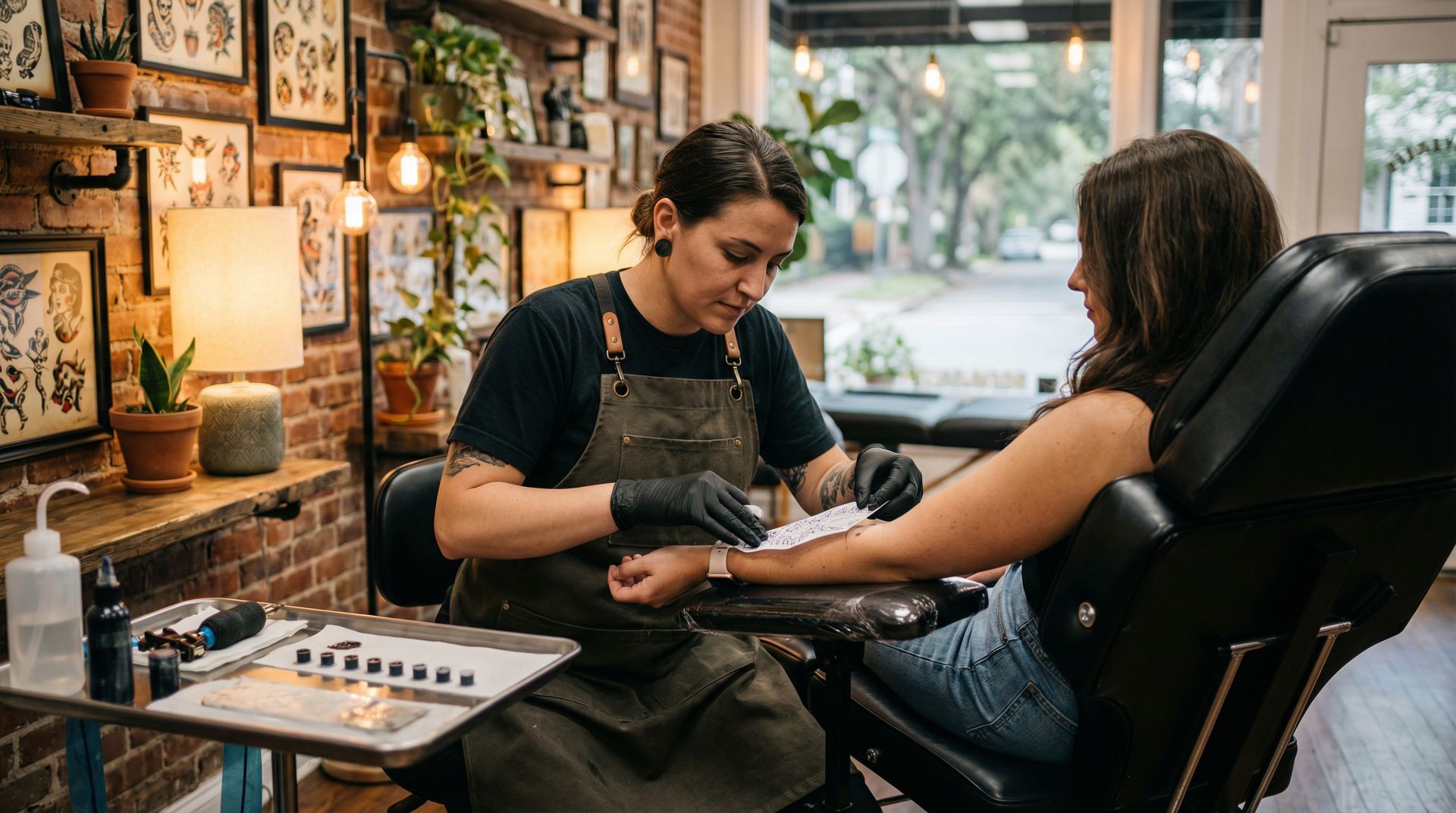
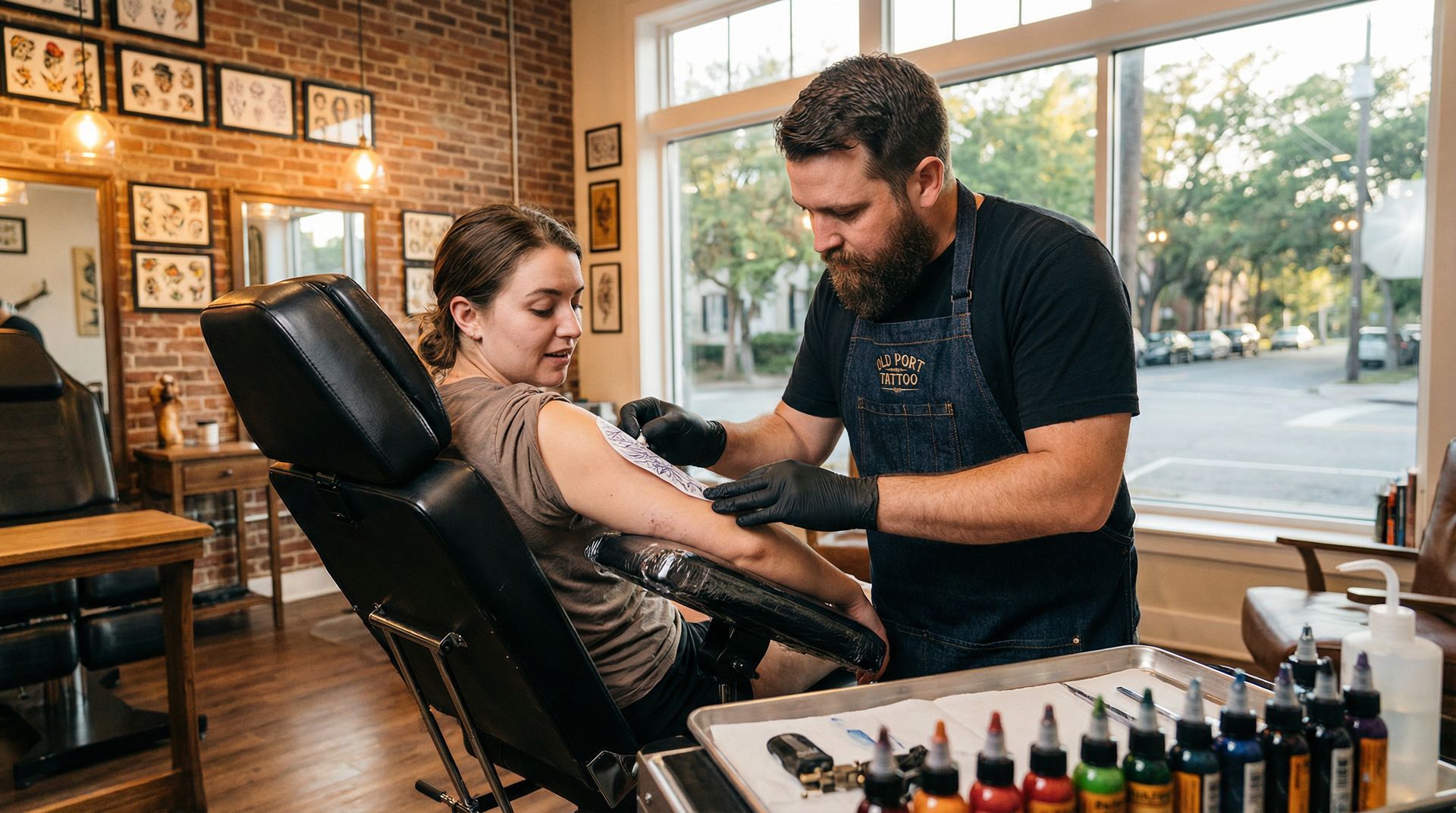
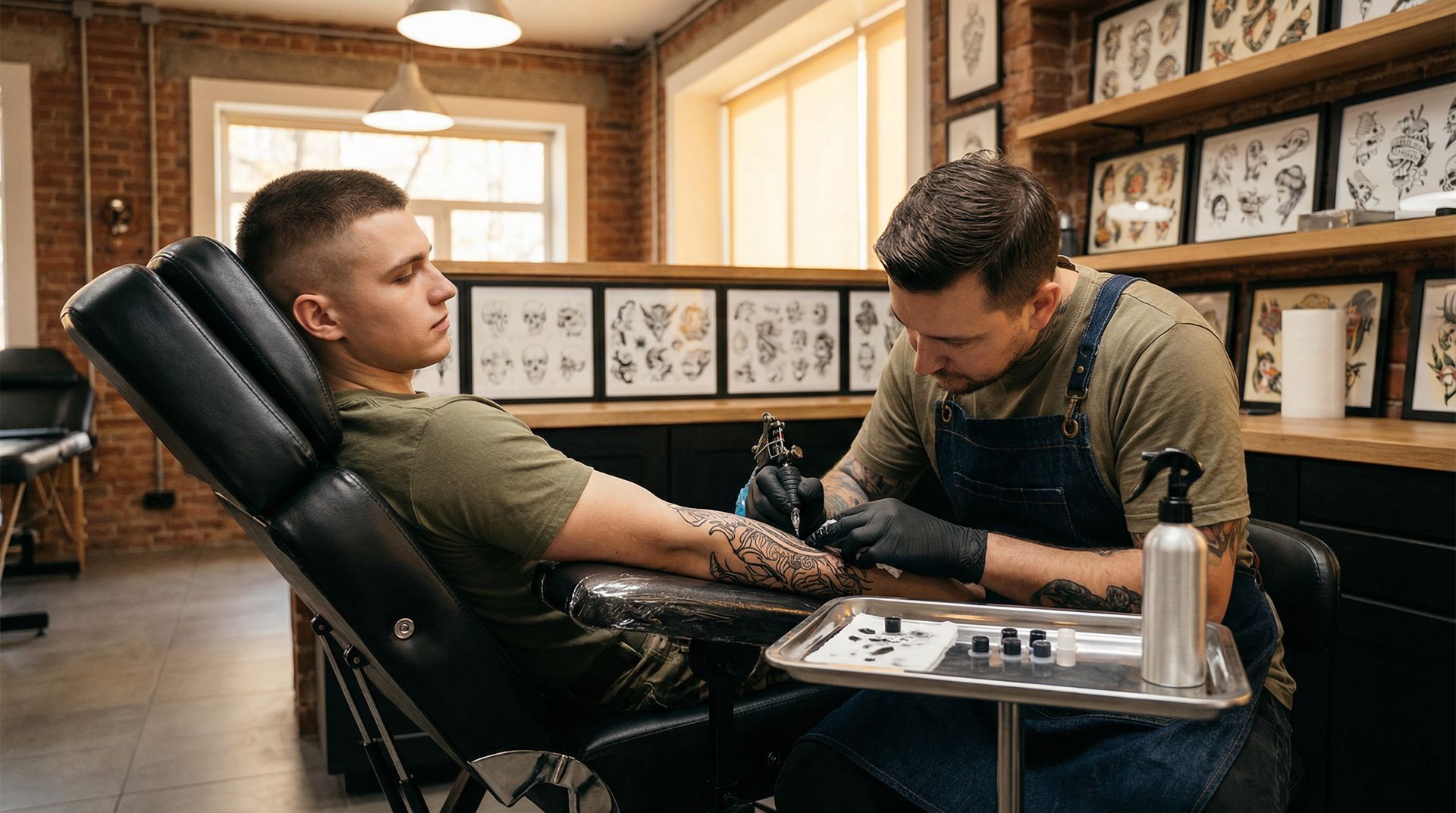
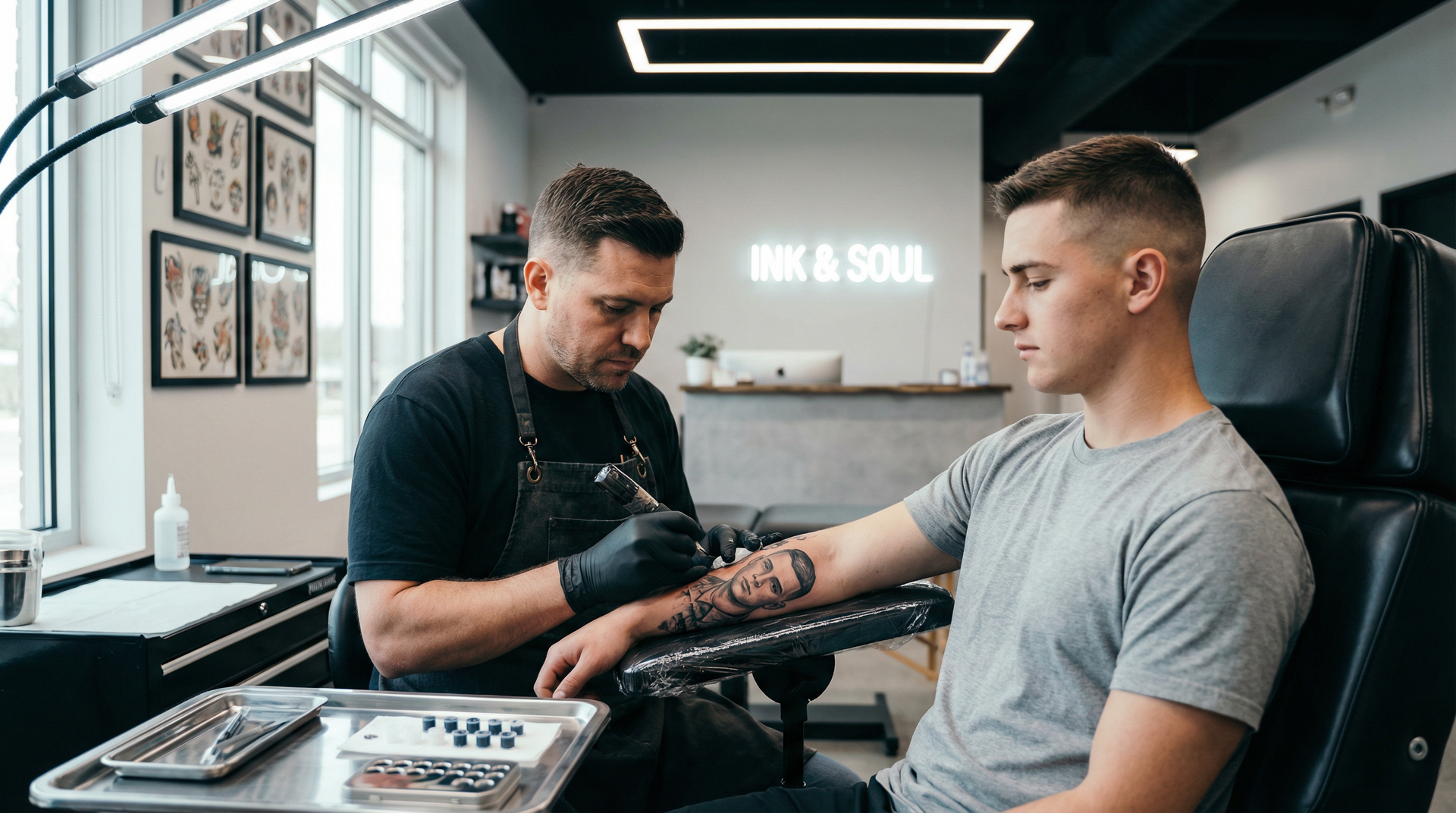
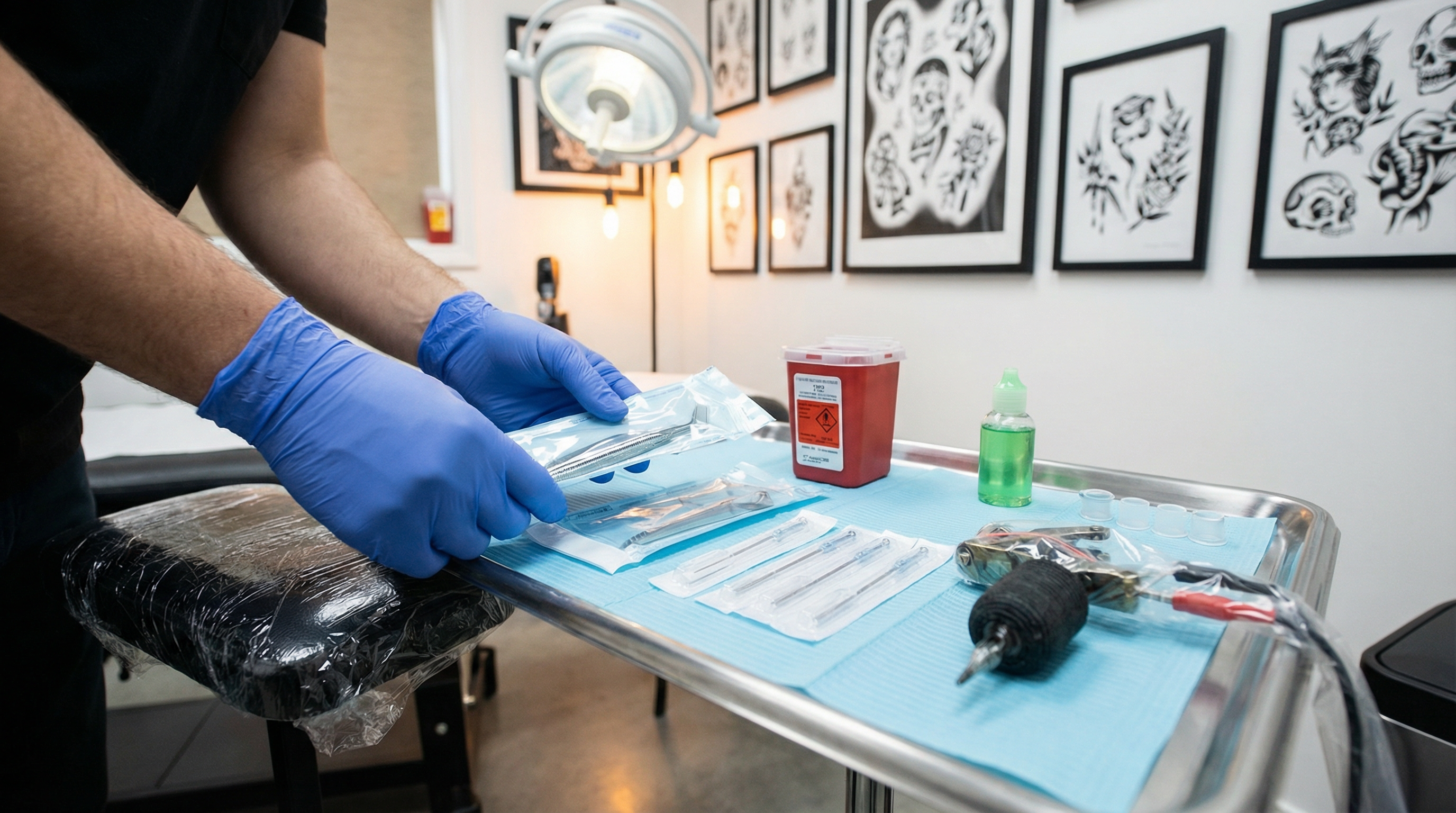
In a proper setup, you’ll see single-use barrier protection on anything that might be handled during your tattoo or piercing, especially after gloves are on:
- Tattoo machine grip wrap or disposable grips
- Clip cord / RCA cord sleeves
- Spray bottles bagged or wrapped
- Light handles wrapped
- Arm rests and chair surfaces protected
- Dental bibs or disposable covers on trays
What you should observe during setup: the artist/piercer should set up new barriers in front of you or bring you to a station that’s clearly been freshly prepped. If they’re touching drawers, phones, or their personal water bottle with gloved hands, that’s a contamination problem (more on red flags below).
2) Glove changes (often) + hand hygiene (always)
Gloves are not magical. They’re only clean until they touch something non-sterile.
You should expect glove changes when the artist/piercer:
- Switches from setting up to working on your skin
- Touches a non-barriered surface (phone, drawer handle, door, etc.)
- Leaves the station and comes back
- Cleans up and starts aftercare wrapping
Also: you should see handwashing or sanitizer use before gloves go on and after they come off. This is basic—no exceptions.
3) Single-use items should actually be single-use
For tattoos, that typically includes:
- Needles (always single-use)
- Ink caps (single-use)
- Razors (single-use)
- Tongue depressors (single-use)
- Paper towels, bibs, ointment packets (single-use)
For piercings, that includes:
- Sterile needles (single-use)
- Single-use receiving tubes (or properly sterilized tools, depending on method and jewelry)
- Gauze and swabs
- Markers/skin pens intended for safe use (and handled correctly)
If anything looks like it’s being “saved for later,” that’s not a vibe—that’s a health risk.
4) Sharps disposal should be immediate and obvious
After a tattoo needle is done, it should go straight into a sharps container—not onto a tray, not wrapped in paper towels, not “set aside.”
Same for piercing needles. A legit setup has a clearly labeled sharps container that’s close enough to use without walking around the room holding a used needle.
5) Instrument sterilization: what matters (and what to ask about)
Some tools can’t be sterilized and must be disposable. Others can be sterilized, but only if the process is correct.
In a professional studio, sterilizable tools are typically:
- Cleaned (often in an ultrasonic cleaner)
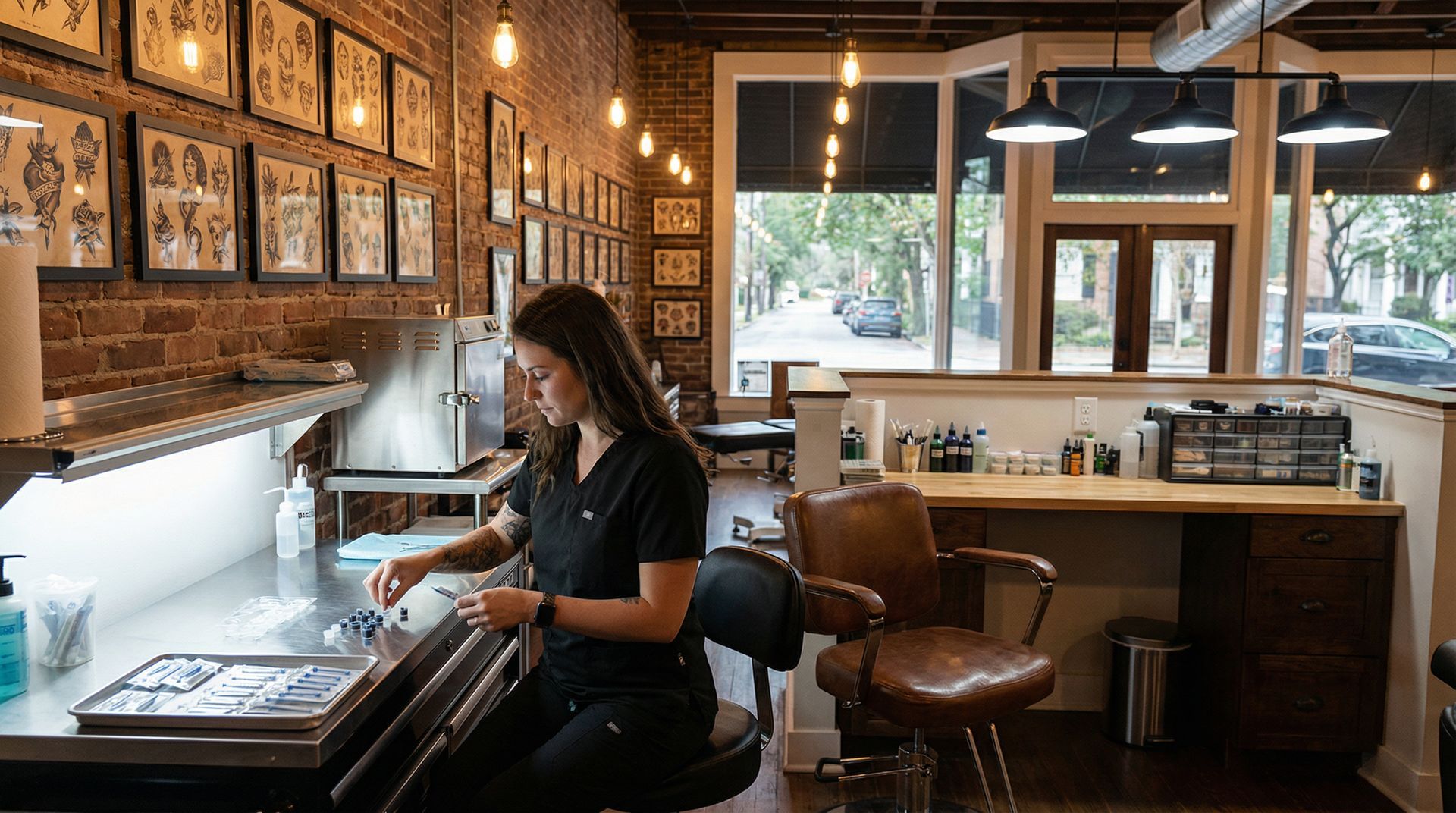
- Packaged in sterilization pouches with indicator strips
- Sterilized in an autoclave
- Stored sealed until use
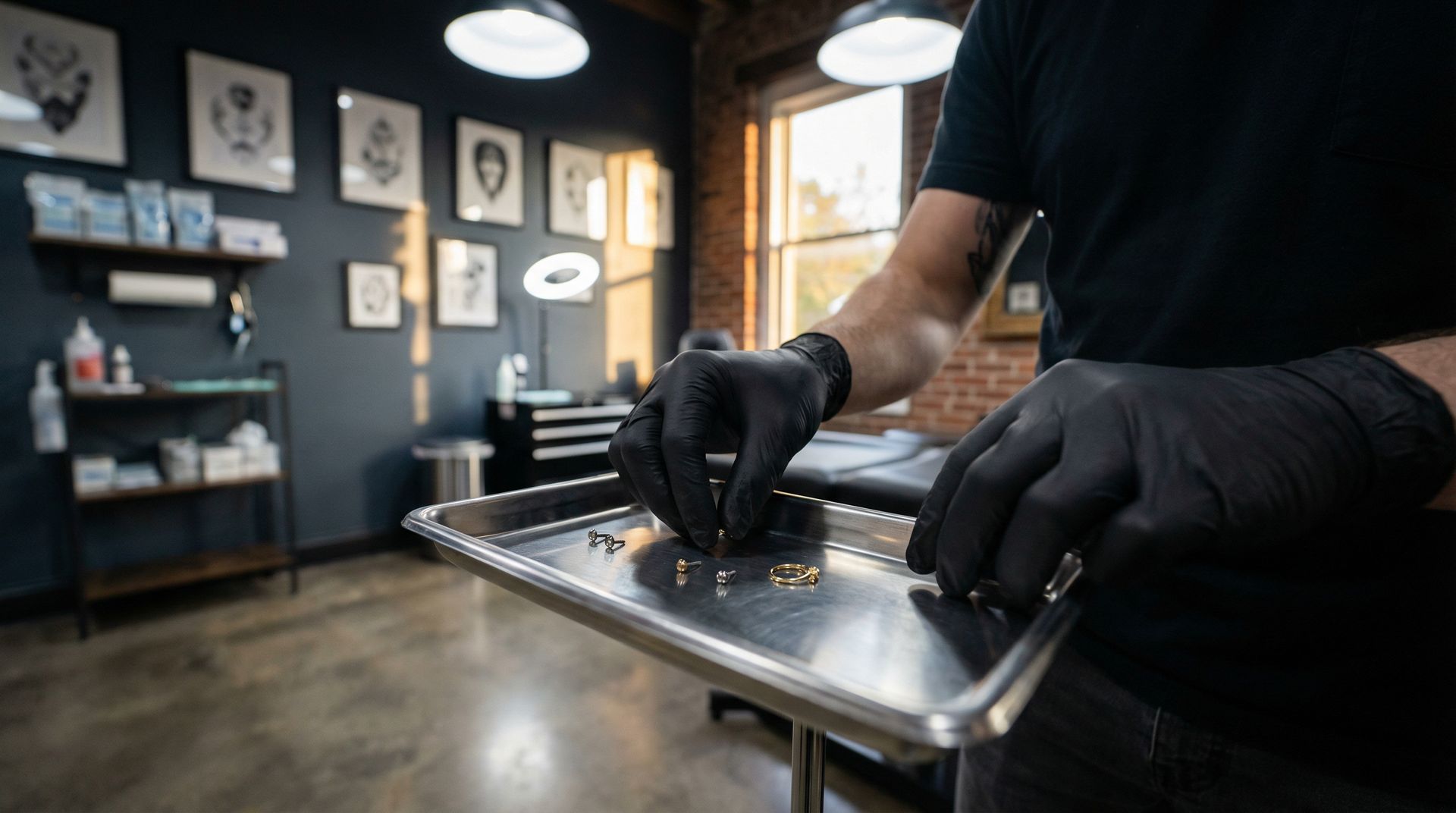
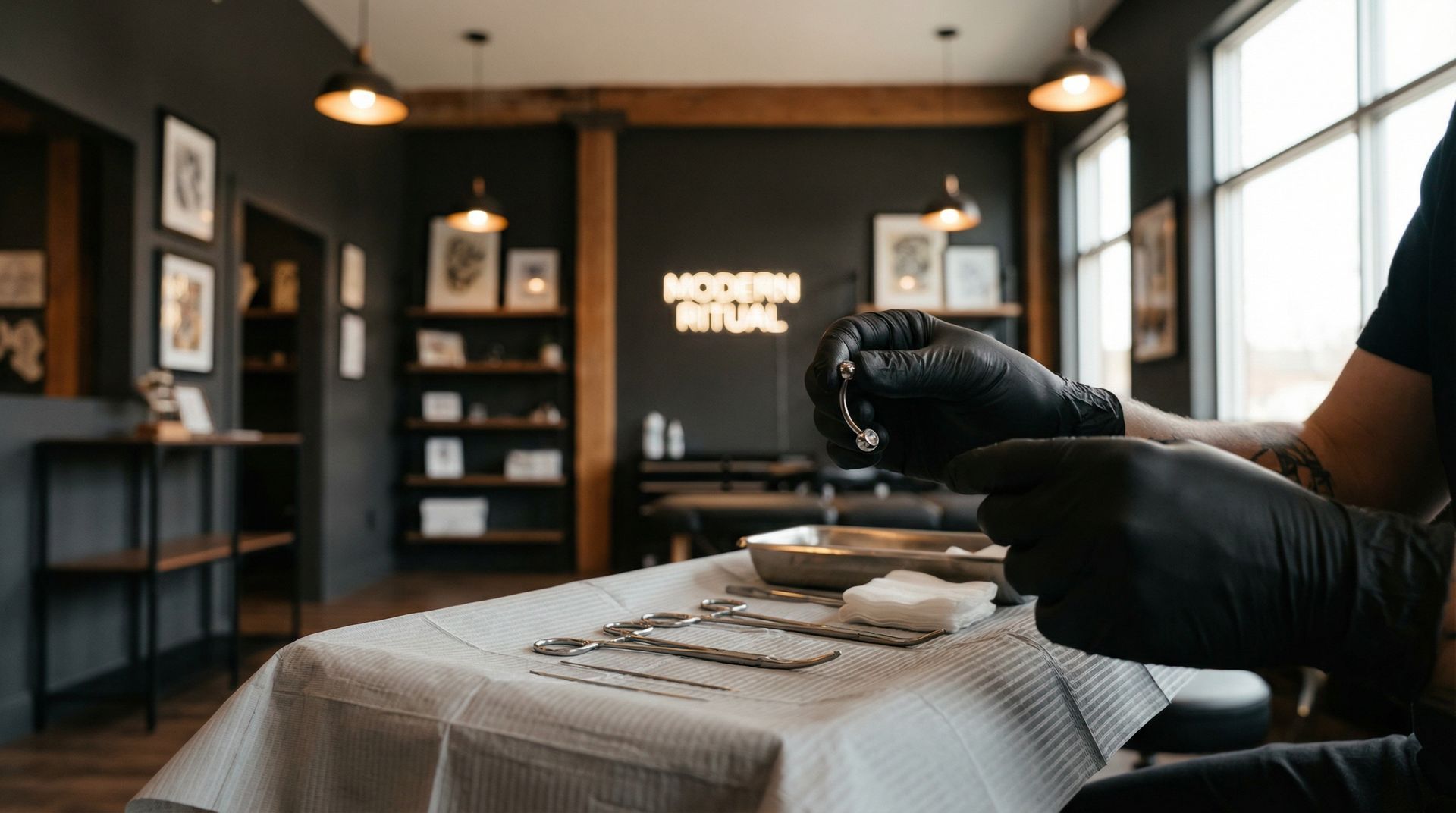
If you’re getting a piercing, some studios use pre-sterilized, single-use items for many steps, and sterilized tools where appropriate. Either way, you should see sterile packaging opened in front of you for anything that needs to be sterile.
6) Clean zone vs. dirty zone separation
One of the biggest “behind the scenes” safety habits: keeping dirty items away from clean ones.
You should see a clear separation between:
- The clean prep area (where sterile packages and supplies live)
- The procedure area (your station)
- The dirty area (where used tools or contaminated items go)
If the same counter is used for clean supplies and then used needles/dirty items with no separation, that’s a problem—even if everything “looks wiped down.”
Look for fresh barriers, a sharps container nearby, sealed sterile packs, single-use items laid out, and the artist changing gloves at the right moments. If you don’t see those basics, you’re allowed to pause and ask questions.
If you’re comparing services, you can also check what’s involved on the studio pages: custom tattoo services and professional body piercing.
Paperwork and professionalism: the safety steps you don’t see on Instagram
Clean procedures are step one. Step two is how the studio manages risk with documentation, communication, and screening. A professional shop doesn’t act annoyed when you ask about this—they already have a process.
Consent forms are more than a formality
You should expect to fill out paperwork that covers:
- Your legal name and ID verification (especially for age requirements)
- A consent form acknowledging risks and responsibilities
- A short medical history / disclosure section (allergies, medications, conditions)
If a studio is willing to skip the paperwork, they may also be willing to skip safety steps that matter.
Aftercare instructions should be clear and specific
For tattoos, good aftercare guidance typically covers:
- How long to keep your bandage/film on (if used)
- Washing instructions (frequency, what to use, what to avoid)
- Moisturizing guidance (thin layers, not overdoing it)
- What “normal healing” looks like vs. signs of a problem
- Swimming, sun exposure, and gym considerations
For piercings, it should cover:
- Cleaning routine (simple and consistent)
- Hands-off rules (no twisting jewelry, no unnecessary touching)
- What to avoid (makeup, certain products, bodies of water)
- Normal swelling/redness vs. warning signs
- When to downsize jewelry (where applicable)
A studio that’s serious about safety wants you to heal well, because a good result is the goal—not just getting you in and out.
Have questions about barriers, sterilization, or aftercare? Ask before you book—your safety comes first.
How jewelry and ink should be handled
Even if you don’t know every technical detail, you can still watch for safe handling.
For tattoos, you should see:
- Ink poured into single-use caps (not tattooing directly from the bottle)
- No double-dipping into bottles
- Clean handling of ointments (no “community jar” being dipped into)
For piercings, you should expect:
- Sterile jewelry (or jewelry handled in a way that maintains sterility)
- Clear discussion of jewelry materials (for many piercings, implant-grade options are the standard expectation—like implant-grade surgical steel or other body-safe materials depending on your needs)
If someone can’t tell you what the jewelry is made of, that’s not a small detail—it’s a big one.
Client screening: a reputable studio will say “not today” sometimes
This is a professionalism flex, not an inconvenience. A studio that cares about safety will screen for things that make tattoos/piercings riskier or harder to heal, like:
- You appear intoxicated or impaired (sobriety requirements exist for a reason)
- You’re sunburned (fresh sunburn + tattoo/piercing = bad healing setup)
- You have certain medical conditions or are on medications that impact clotting/healing
- The placement you want is currently irritated, infected, or damaged
- You can’t provide ID when it’s needed
- You’re trying to rush through aftercare instructions
In Savannah, it’s common to walk in after a day outside—be honest about sun exposure. A quick reschedule can save you weeks of frustration.
If you’re trying to choose an artist style that fits (blackwork, realism, neotraditional, etc.) and want to feel comfortable with the team, you can preview portfolios here: meet our artists.
A “questions to ask” script (use this word-for-word if you want)
You don’t need to interrogate anyone—but you can ask direct questions. A professional will answer clearly, without getting defensive.
Sterilization & setup
- “Can you walk me through what’s single-use vs. what gets sterilized?”
- “Do you open sterile needles/jewelry in front of customers?”
- “How do you separate clean and dirty items during a tattoo or piercing?”
Jewelry materials (piercing)
- “What materials do you carry for initial piercings?”
- “Is this implant-grade surgical steel (or another implant-grade option), and what brand/spec is it?”
- “If I’m sensitive to certain metals, what do you recommend?”
Artist/piercer experience & process
- “Who will be doing my tattoo/piercing, and how long have they been doing this?”
- “If I’m unsure about placement or size, can we do a quick consultation first?”
- “For tattoos: do you require a deposit for appointments, and does it go toward the final cost?”
Aftercare & support
- “What aftercare do you recommend for my specific tattoo/piercing?”
- “If I have swelling or irritation, what’s the best way to check in?”
- “What’s your guidance on what’s normal vs. when I should seek medical care?”
If you want to ask these questions before you commit to sitting down, Call Us Now at 912-352-9926 or visit https://www.resurrectionink.com/tattoos.
Red flags that should make you walk out
You don’t owe anyone your time, your money, or your skin. If something feels off, you can leave—politely and immediately.
Here are practical, objective red flags:
Hygiene & contamination red flags
- No glove changes when touching non-sterile surfaces
- Artist/piercer touches a phone, door, or drawers with gloved hands and keeps working
- Needles/jewelry are not opened from sealed packaging in front of you (when sterility is required)
- No sharps container in the room/station area
- Reusing anything that should be single-use (razors, ink caps, needles—ever)
Professionalism & process red flags
- No consent forms, no ID check when appropriate
- No aftercare instructions offered (or they’re vague like “just keep it clean”)
- You’re pressured to get tattooed/pierced when you’re unsure or not ready
- They’ll tattoo/pierce someone who’s visibly intoxicated
- Your concerns are brushed off (“you’ll be fine”) instead of addressed
Quality-control red flags (piercing specific)
- Mystery metal jewelry with no clear material info
- Jewelry that looks scratched, worn, or handled carelessly
- No discussion of appropriate sizing (especially swelling allowance)
- No mention of downsizing when that’s relevant for healing
Walking out can feel awkward in the moment, but it’s always easier than dealing with a preventable infection—or a piece you regret because you rushed.
What you should expect from a clean, professional studio in Savannah
When you put all of this together, “clean” looks like:
- A consistent, repeatable setup process (not improvising)
- Barrier protection and glove changes done correctly
- Single-use items used once, then disposed of
- Sterilization practices that are transparent and verifiable
- Clear paperwork, clear aftercare, and clear communication
- Screening that prioritizes healing and safety over speed
And yes—your comfort matters too. A safe studio will welcome questions, explain the process, and make sure you understand what’s happening before anything starts.
If you’re planning a walk-in tattoo or piercing (or you want to book an appointment with a deposit that applies toward your tattoo), it’s smart to choose a shop that treats safety as part of the craft—not an extra.
For anyone looking around town, you can also check studio info and updates here: studio home page and if you’re thinking about gifting a safe experience instead of guessing someone’s style, there’s: gift cards and merchandise.
Final checklist: before you sit down, you should feel sure—not uncertain
Right before you start, you should be able to say “yes” to these:
- I saw fresh barriers and a clean setup
- I saw glove changes at the right times
- Needles/jewelry were sealed and opened appropriately
- I was given (or offered) aftercare instructions
- My questions were answered clearly
- I’m not being rushed, pressured, or talked down to
If any of that is missing, pause. Ask. Or walk.
Want to feel confident about safety before you sit down? Call 912-352-9926 or reach us online to ask about our studio standards.
Phone: 912-352-9926