Tattoo Pricing in Savannah: What You’ll Actually Pay For (And How to Get an Accurate Quote)
You’ve got a tattoo idea you’re excited about—but when you start asking around, the numbers feel all over the place. One person says their palm-sized piece was “cheap,” another says a similar size cost double, and you’re left wondering what you should actually budget for in Savannah without getting hit with surprises later.
Call us to discuss your design and placement so we can point you in the right direction.
If you’re searching “ tattoo pricing Savannah ,” here’s the truth: pricing isn’t random. It’s usually based on time, difficulty, and the level of customization—not just the size. Below is a practical breakdown of what affects cost, how deposits typically work, and exactly what to send a studio so you get an accurate quote the first time.
FAQ: What affects tattoo pricing in Savannah?
1) How much does tattoo size affect cost?
Size matters—but mostly because it changes time .
A tiny tattoo can still take time if it needs clean lines, perfect symmetry, or tricky placement. And a larger tattoo isn’t always expensive just because it’s big —it’s expensive because it may require:
- Longer stencil placement
- More linework
- Multiple passes of shading
- Layered color packing
- More breaks to reduce swelling and keep lines crisp
Real-world example (typical time, not a promise):
- 1–2 inch simple blackwork symbol (wrist/ankle): could be quick if it’s clean and straightforward
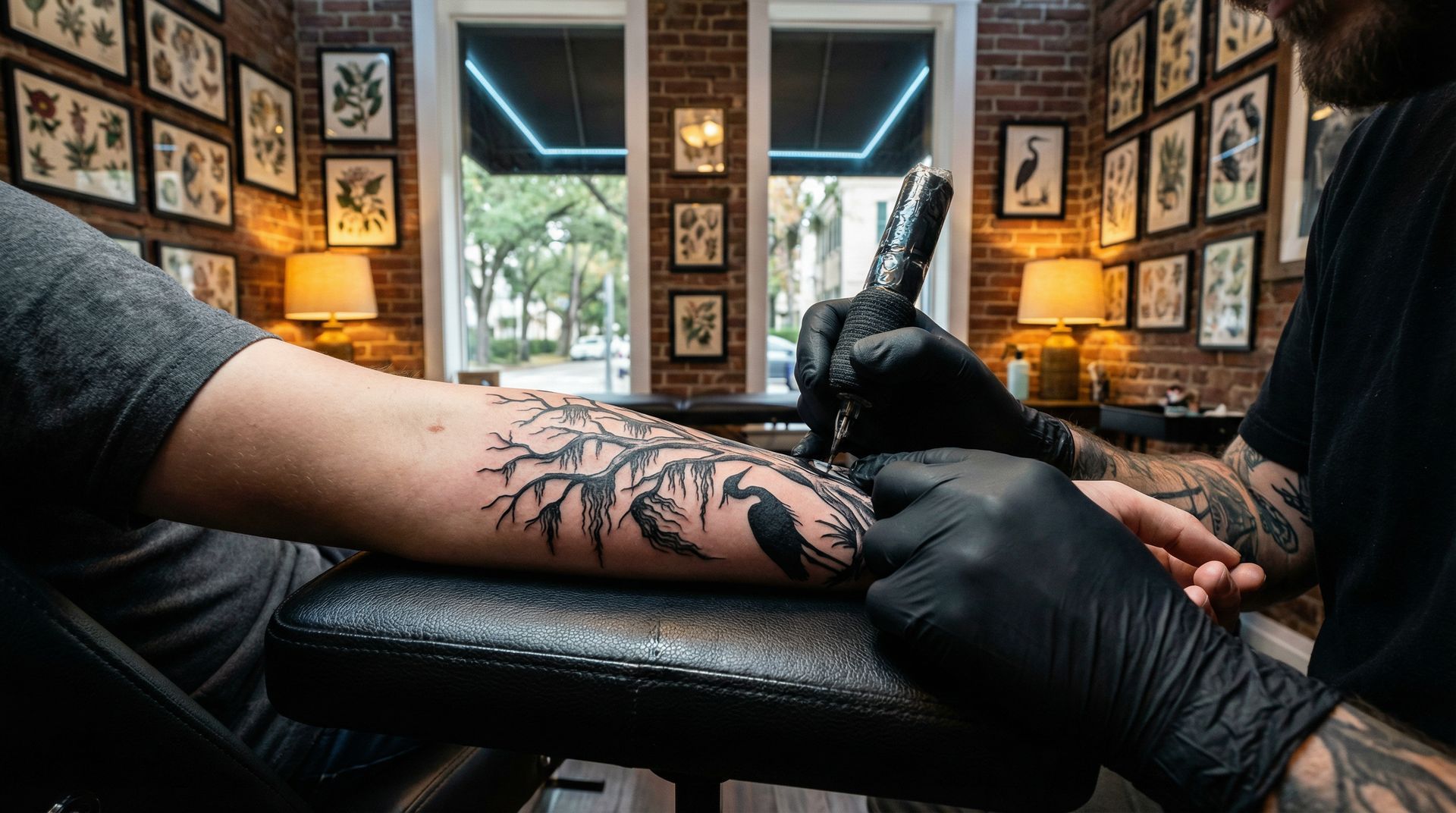
- Palm-sized black-and-grey rose (forearm): more time due to shading gradients and contrast
- Half-sleeve neotraditional (upper arm): longer due to bold linework + color fills + background elements
- Realism portrait (outer bicep/forearm): often longer because realism relies on smooth transitions and precise values
Studios price tattoos to match the time and skill required to do it correctly—because a rushed “deal” can turn into a cover-up later (which is almost always more expensive than doing it right the first time).
2) Why do complexity and detail change the price so much?
Complexity is one of the biggest drivers of cost because it changes how long your artist is working at high precision.
Things that raise complexity:
- Fine linework with lots of tiny intersections
- Geometric patterns that must be perfectly straight and consistent
- Lettering (especially small fonts that must stay readable after healing)
- Realism (skin texture, hair, reflective highlights)
- Highly rendered details (scales, lace, filigree, ornate frames)
- Heavy saturation (solid blackwork, dense color packing)
A simple outline might take minutes; clean detail work takes patience —and patience takes time.
If you want inspiration or you’re trying to match the right artist to your style (blackwork, realism, neotraditional, etc.), browsing portfolios helps you understand what level of detail you’re asking for. see artist styles in the gallery
3) Is color more expensive than black and grey?
Often, yes—because color usually takes longer and may require more layering.
Black and grey can be fast or slow depending on how smooth the shading is. A bold blackwork piece (solid fills) can also take time because packing black evenly is labor-intensive and needs multiple passes for saturation.
Color may cost more because:
- You’re often packing multiple colors (each one takes time to apply evenly)
- Some designs require layering to get the right brightness
- Color realism and smooth blends can be slower than black and grey shading
If you’re budget-conscious, one of the easiest ways to control cost is to choose a design that looks great in blackwork or limited color (for example: black + one accent color).
4) Does placement affect the price?
Yes—placement can raise the price because some areas are harder to tattoo well.
Hard placements usually mean:
- Skin stretches or moves a lot
- Tight curves make linework harder
- The area is sensitive, so you may need more breaks
- It’s harder to position your body comfortably for long periods
Placements that often take more effort:
- Ribs / sternum (breathing movement)
- Hands / fingers (small area, high precision, healing considerations)
- Feet / ankles (bony, swelling, healing friction)
- Elbows / knees (texture + movement)
- Inner bicep / inner arm (sensitive, can swell)
- Neck / behind the ear (tight space, tricky angles)
Even if two tattoos are the same “size,” a piece on the outer forearm may be simpler to execute than one in a high-movement spot.
5) How do “time estimates” work for tattoo pricing?
Most professional pricing comes down to one question: How long will this take to do correctly?
Time includes more than the tattooing itself:
- Consultation and planning
- Custom drawing or modifications
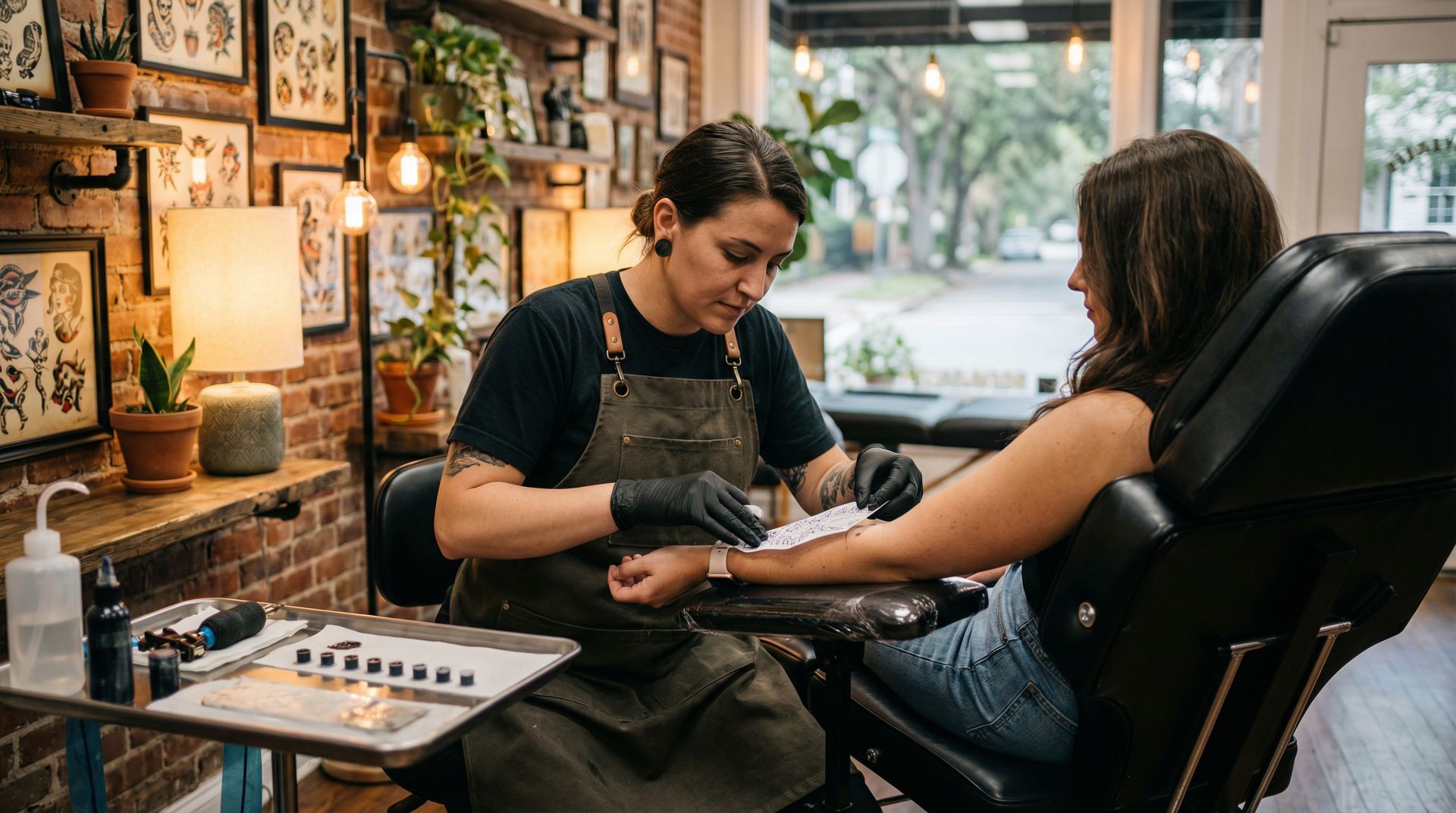
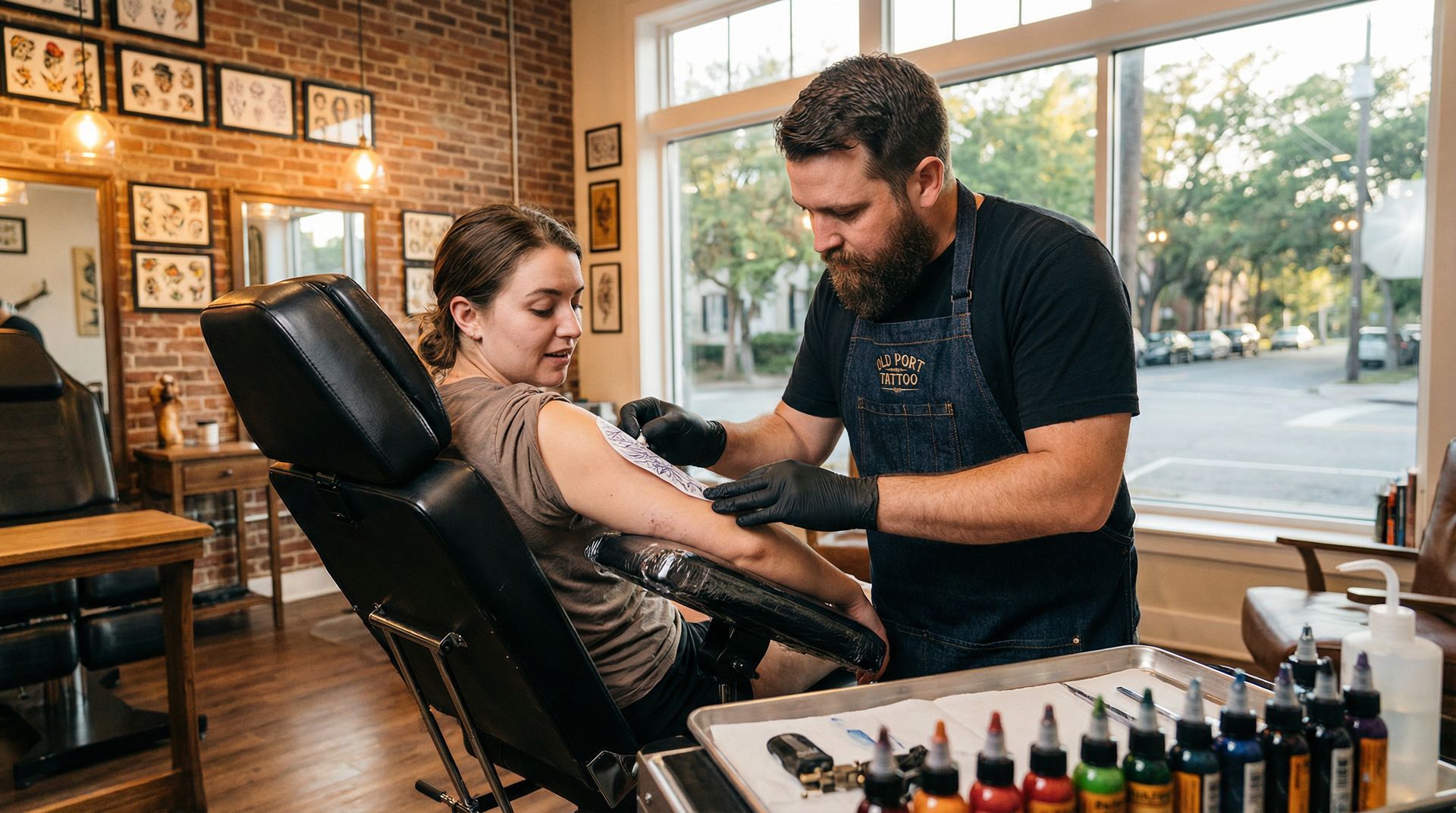
- Stencil sizing and placement
- Prep and set-up (sanitation, workstation)
- Tattooing time
- Bandaging and aftercare instructions
That’s why comparing prices without comparing time and difficulty can be misleading. A lower quote may mean:
- Less detail than you’re imagining
- Smaller final size than you want
- Simplified shading
- Rushed execution (which risks blowouts, patchy saturation, or uneven lines)
6) What’s the difference between custom and flash pricing?
Flash (pre-drawn designs) is usually faster to set up because the art already exists. You might still adjust size or minor details, but it’s typically less design time.
Custom tattoos require drawing time—especially if you’re combining references, matching a specific style (realism vs neotraditional), or designing something that fits your placement perfectly (like a wraparound forearm piece).
Custom doesn’t automatically mean “expensive,” but it does mean you’re paying for a design built for you —not a one-size-fits-all image.
To learn more about booking custom work and what styles are available, start here: custom tattoo booking info
FAQ: Shop minimums, hourly vs. piece rates, and deposits
7) What is a shop minimum (and why do studios have one)?
A shop minimum is the lowest price a studio charges, even for small tattoos.
It exists because even a tiny tattoo requires:
- Single-use needles and supplies
- Barrier protection and sterilization protocols
- Set-up and breakdown time
- Professional expertise and clean execution
So if you’re thinking, “It’s only 10 minutes,” the studio still has real costs and time involved to do it safely and professionally.
8) Do studios charge hourly or by the piece?
You’ll commonly see both:
- Piece rate: A flat price for that specific design at that specific size and placement. This is common for smaller tattoos or clear, contained concepts.
- Hourly rate: More common for larger work (sleeves, realism, full-color pieces, cover-ups) where time can vary based on skin, breaks, and complexity.
Neither method is automatically better—it depends on the tattoo. Hourly pricing is often fairest for large custom work because it reflects actual time spent.
9) How do tattoo deposits work for appointments?
Deposits are normal for appointment-based tattooing. They protect both you and the artist by reserving time and covering prep work.
At Resurrection Ink Tattoos And Body Piercing, a $100 deposit is required to secure tattoo appointments , and the deposit applies toward your tattoo .
What a deposit typically covers:
- Your appointment slot (so the artist blocks off time for you)
- Custom drawing or design refinement time
- Admin time (confirmations, scheduling, planning)
What it typically doesn’t cover:
- The full tattoo price (it’s applied toward it)
- Unlimited last-minute changes (major changes can require more design time)
Policies vary by studio, but many shops have guidelines like:
- Rescheduling is allowed with reasonable notice
- Repeated last-minute reschedules or no-shows may forfeit the deposit
- Significant design changes close to the appointment may require extra time or a new booking plan
If you’re unsure, ask before you book so you know exactly what to expect—no awkward surprises.
When you’re comparing tattoo pricing in Savannah, compare “total experience,” not just the number: artist portfolio, cleanliness, line quality, healed photos, and clear aftercare. The cheapest tattoo often becomes the most expensive once you factor in touch-ups, fixes, or cover-ups.
How to get an accurate quote (copy/paste checklist)
If you want pricing that’s actually useful, the goal is to give the studio enough information to estimate time and complexity. Here’s what to send for the most accurate quote:
10) What info should you send for a tattoo estimate?
Send this:
- Reference photos
(2–5 images is plenty)
- One for subject matter (what it is)
- One for style (how it should look)
- Exact placement (example: “outer left forearm” vs “arm”)
- Size in inches
(length x width)
- If you don’t know: measure the area with a ruler and snap a photo
- Color or black/grey
- Mention limited palette if you want to control cost
- Style notes
(a few words helps a lot)
- Examples: blackwork, neotraditional, realism, fine line, traditional
- Any must-keep details (names, dates, specific symbols)
- Your timeline (are you trying to do this before an event or trip?)
If you’re also considering a piercing while you’re in the studio (or you’re comparing healing commitments), it helps to know what you’re taking on. body piercing info and aftercare basics
Call us now to discuss your design, size, placement, and style so we can help you plan confidently.
11) What questions should you ask about sessions and healing time?
A good quote isn’t just about dollars—it’s also about planning your life around healing.
Ask:
- How many sessions do you expect for this size and detail level?
- How long is each session likely to be?
- If it’s color or realism: Will it be done in one pass or multiple layers?
- How long should I wait between sessions?
- What’s the aftercare plan and what should I avoid (sun, swimming, sweating)?
- If it’s a high-friction spot (foot, ribs, hand): What healing issues are common for this placement?
Healing time matters for Savannah customers because warm weather, humidity, beach days, and outdoor work can all affect how easy it is to protect a fresh tattoo. Planning ahead saves you stress.
12) What about tipping etiquette for tattoos?
Tipping is appreciated in tattooing, and it’s a common way customers say, “I value your time and skill.”
There isn’t one universal rule, but here’s a practical approach:
- If you’re happy with the experience, many customers tip a percentage (similar to other personal services)
- For large multi-session work, some customers tip per session
- If you can’t tip big, even a smaller tip plus a great review, referring friends, and showing up prepared/on time goes a long way
If you’re unsure what’s appropriate, you can ask at checkout—professionally and simply.
A few ways to keep your tattoo within budget (without sacrificing quality)
If your quote comes in higher than you expected, you usually have options that don’t involve cutting corners:
- Adjust size slightly (bigger can improve readability, but smaller can reduce time if detail is simplified)
- Simplify background elements (keep the focal point, reduce filler)
- Choose black/grey instead of full color
- Limit the palette (black + one color accent)
- Split into sessions so you can budget over time
- Be flexible on design details (your artist can suggest what will heal best)
If you’re choosing an artist, it helps to match your idea to someone who tattoos that style often. browse tattoo work and specialties
And if you’re thinking about gifting ink (or planning your own future piece), you can also go the gift card route. gift cards and merchandise
The bottom line on tattoo pricing in Savannah
Tattoo pricing isn’t about a mysterious number—it’s about time, placement, complexity, and how custom the work is . When you send clear info (references, dimensions, placement, style), you’re far more likely to get a quote you can trust. And when you prioritize quality over “cheapest,” you’re protecting your skin—and your wallet—from expensive fixes later.
Call 912-352-9926 to discuss your design and placement, or start here: